



U.S. 9 Truck Bypass
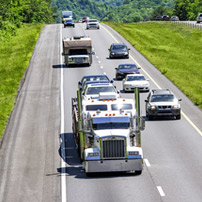 Sussex County is in the process of improving the safety of the U.S. 9 truck bypass from east of Georgetown to U.S. 113. The plan by the Delaware Department of Transportation (DelDOT) calls for upgrades to the roads used for the truck bypass including shoulders, appropriate turn lanes, and intersection improvements. The plans also address the room needed to extend the main runway of the Delaware Coastal Airport in the future.
According to DelDOT, around 800 trucks a day use the bypass, which has several locations with higher than average crash rates compared to both state and county averages. At present, the travel lanes are 10-11 feet wide and the shoulders between one and two feet. By 2040, traffic is anticipated to increase to 1,205 trucks, or about 20 percent of vehicles using the road. According to DelDOT, that number is high for comparable roads in Delaware. The increase is due in part to new commercial development in the county industrial park.
Relocating Park Avenue
The Park Avenue Relocation Project is still in the environmental assessment phase. After that there will be a 30-day public comment period. Officials are planning the initial design phase for Spring 2018 with construction starting in 2022. The project should take two years to complete and cost approximately $33.8 million. The price tag includes construction costs, relocating utilities, right-of-way, and environmental mitigation.
Residents on and near Park Avenue expressed varying reactions to the proposed plan. Some have been notified that widening the road on each side to create ten- foot shoulders will take land from their front yards. Although residents will receive compensation from DelDOT for the land, they are concerned that their property values will decrease. Increased truck traffic also means increased noise levels. Residents said that in a workshop in 2016, DelDOT presented different options for improving the truck bypass and none of them examined removing the truck traffic from residential areas and relocating the path to rural locations.
Other residents expressed relief that the truck bypass will finally have adequate shoulder space. The relocation project will widen the travel lanes to 12 feet and add ten-foot shoulders which will aid emergency vehicles trying to reach the scene of a car accident. A clear zone of 20 feet from the edge of the travel lanes will also be added. The Delaware Motor Transport Association said that truckers would welcome the improvements.
Supporting Economic Growth in Sussex County
Besides improving safety for both local and through-traffic, county officials believe that improving U.S. 9 can help east-west movement through the area which will allow the airport to grow. The Delaware Coastal Airport is a vital link in the transportation system of Southern Delaware with nearly 40,000 landings and takeoffs annually. When the relocation project is finished, the airport can consider extending the runway. Future improvements to the bypass could possibly accommodate traffic to and from the beaches and along the U.S. 113 commuter corridor.
Wilmington Truck Accident Lawyers at Jacobs & Crumplar, P.A. Advocate for Injured Victims of Truck Accidents
If you or a loved one has been injured in a truck accident, we can help you seek compensation. The Wilmington truck accident lawyers at Jacobs & Crumplar, P.A. are experienced and committed to holding those responsible for your injuries accountable for their negligence. Call 302-656-5445 or 800-355-1818 today to schedule a free consultation with a skilled Wilmington truck accident lawyer, or contact us online. We have locations in Wilmington and Georgetown to serve clients throughout Delaware.
Safe Shopping for Toys
 Every year sees many children rushed to the emergency room with toy-related injuries, particularly choking hazards. While many toys are well made and safe for little hands to play with, many are dangerous and should be avoided. With the holiday season upon us, it is important to review safety tips for toy shopping so that any gift you give will be well received and enjoyed by the child for whom it is chosen.
The U.S. Consumer Product Safety Commission (CPSC) regulates toy safety standards. Since 1995, any toy imported into or made in the U.S. must comply with these standards. Any toys that have been recalled are listed on the commission’s website. The CPSC also publishes guidelines for buying children’s toys. Using these together with some common sense can be very helpful when choosing a toy for a child.
Toys for Toddlers
First and foremost, choose an age appropriate toy. For babies, toddlers and preschoolers, this means toys without small parts that can present a choking hazard. Any eyes, wheels, or buttons that could be pulled or chewed off are dangerous for this age group. Objects like marbles, coins, or balls less than 1.75 inches in diameter can block a child’s airway if swallowed causing asphyxiation.
When buying squeaky toys, rattles, or toys that play music or make electronic sounds, check to see how loud they are before you buy. Very small children like to hold toys to their ears to hear what happens when they push buttons. Inappropriately loud toys can cause hearing damage when used this way.
Batteries and their fluids are extremely dangerous for small children. Any battery-operated toys must have a battery pack that screws tightly closed and cannot be pried open.
Toys for Grade School Children
For children in grade school, riding toys such as bikes, scooters, inline skates, and skateboards should be used only with helmets. Any kind of dart or arrow toy should have soft tips. Check electronic toys for labeling indicating that it meets Underwriters Laboratories standards (UL).
Tips for Teenagers
Many digital toys and game players come with parental control options. These can be extremely useful in providing breaks from the internet for teenagers who spend too much time online.
Other Toy Buying Tips
- Checking painted toys for lead free paint
- Making sure art materials are non-toxic: for crayons and paints, look for a label that says ASTM- D-4236 from the American Society for Testing and Materials
- Checking fabric toys for flame retardant labeling
Once the toys are in your home, check them regularly for any broken parts or seams, splinters in wooden toys, or rust on metal toys. Broken toys should be removed immediately to prevent them breaking further and causing injury.
Wilmington Product Liability Lawyers at Jacobs & Crumplar, P.A. Help Those Injured by Defective Products
Toys purchased in the U.S. must meet rigorous safety standards. But despite this fact, manufacturers are frequently forced to issue recalls for toys that pose a risk to the children playing with them. If your child has been injured by a defective product, contact an experienced Wilmington product liability lawyer at Jacobs & Crumplar, P.A. to arrange a free review your case. Call 302-656-5445 today to schedule an appointment in our Wilmington or Georgetown office, or contact us online. We serve clients throughout the area, including those in Dover, Delaware.
Halloween Safety
 Halloween is an extremely popular holiday, with more Americans celebrating than ever before. Last year broke records as 171 million people participated in Halloween festivities, spending a new high of $8.4 billion on parties and costumes. As the holiday approaches, parents will want to include safety in their preparations for Halloween celebrations.
Safety Tips to Keep in Mind
Visibility – Remind children of the rules of right-of-way before they go out trick-or-treating. Never assume a car can see you or that it will stop for you. Use well-lit streets and stay on the sidewalks. Only cross the road at crosswalks and never from between parked cars. Costumes that are bright and reflective can help prevent children from becoming victims of a car accident. Reflective tape can be purchased to add to readymade costumes. If you must go trick-or-treating after dark, carry flashlights or wear glow sticks.
Costume Safety – See that your child’s costume is not too long so that tripping and entanglement will not be a problem. Shoes should be sturdy since most children are out in the neighborhood for at least a few hours. If the costume involves a wig or mask, make sure it does not impair your child’s vision. If possible, replace masks with face makeup to avoid this issue. If purchasing a costume, read the label to see if it is flame retardant. Any swords, sticks, or wands should be checked for sharp edges. Falling on a sharp costume accessory could cause serious injury to a child.
Treats and Sweets – Before heading out for trick-or-treating, feed everyone a light meal or healthy snack to cut down on the temptation to eat the treats being collected. Do not eat treats on the go; it is best to take them all home and have an adult help with sorting and checking before consuming. The adult can make sure no candy has been tampered with and check for allergens if necessary.
Halloween Safety at Home
Pumpkins – Small children should never carve pumpkins. They can use markers to draw a design which an adult can then carve for them. Use flameless candles to light pumpkins. If real candles are being used, then tea lights are the safest option. Never leave candles unattended or in the same room with pets. Display lit pumpkins on a solid level surface away from curtains and other flammable items.
Sidewalks and Lawns – Keep your sidewalks clear for all the costumed pedestrian traffic that will be coming through. Clean up natural debris like fallen leaves and sticks, as well as personal items like bikes and toys. Garden tools such as rakes and hoses should also be stored away to prevent a slip and fall on your property.
Wilmington Personal Injury Lawyers at Jacobs & Crumplar, P.A. Wish Everyone a Safe and Happy Halloween
Many people look forward all year to celebrating Halloween and most will have a safe and uneventful celebration. If you or someone you love suffers an injury due to the negligence of another person, contact a Wilmington personal injury lawyer at Jacobs & Crumplar, P.A. to discuss your legal options. We have over 100 years combined experience and a proven track record over a wide range of personal injury cases. Call us at 302-656-5445 or 800-355-1818 to schedule a free consultation about your case or complete our online contact form. From our offices in Wilmington and Georgetown, we serve clients throughout upstate and downstate Delaware.
Head-on Crash in Newark Hospitalizes Four Victims
 A head-on crash hospitalized four individuals in Newark, Delaware on Tuesday morning. Around 8 am, a sedan and hatchback car collided on Otts Chapel Road, leaving four victims with serious injuries. The injured were brought to Christiana Hospital for treatment.
Head-on collisions often result in catastrophic injuries to drivers and passengers. In many cases, these types of accidents are fatal. A car accident of this nature could be caused by distracted driving, drunk driving, or a host of other factors including road and weather conditions. If an accident victim survives the crash, the individual may experience long-term debilitating injuries resulting in a loss of income.
If you or a loved one has been seriously injured in a car accident, our Delaware car accident lawyers at Jacobs & Crumplar, P.A. will assist you. To arrange a free consultation, contact us online or call 302-656-5445. From our offices in Wilmington and Georgetown, we represent individuals and families throughout the state, including those in Dover, Delaware.
Two Prison Employees Killed, Several Hurt in Attempted Prison Escape
 Two employees at the Pasquotank Correctional Institution in Elizabeth City, North Carolina were killed when inmates started a fire as part of an unsuccessful escape attempt. Several others were hurt and at least ten people were taken to the Sentara Albemarle Medical Center. Inmates as well as employees were among the injured.
The prison is located near the northeast North Carolina coast and has both high-security and minimum custody buildings that can house up to 900 adult, male felons. The minimum-security prisoners are allowed outside the walls to perform community labor such as road clean-up for the county recycling department.
Local schools went into lock down after receiving word of the escape attempt. The high school students had just finished their day and were about to be released. Once all 725 prisoners had been accounted for after several head counts, local officials determined it was safe for students to leave the schools to return home.
The escape attempt marks the third incident at Pasquotank Correctional Institution this year. In February, a guard was caught entering the facility with contraband items including drugs, cigarettes, and cell phones. Then in April, a prisoner was stabbed several times in the upper body in a fight with another prisoner.
Prison Conditions
The United States has the highest rate of incarceration of any country in the world, more than five times than most other countries. The steady growth since the 1970s of the prison population means that some prisons are overcrowded and understaffed. This was the case in another recent prison incident in Delaware that ended in tragedy when a riot and hostage situation at the James T. Vaughn Correctional Center left a correctional officer beaten and fatally wounded. Wilmington civil rights lawyer, Thomas C. Crumplar, is a member of the legal team representing the family of the slain officer and other JTVCC employees in a federal civil lawsuit alleging that the facility had a long history of problems that were ignored by two governors and several cabinet officials.
An investigation and review of prison conditions after the riot at JTVCC showed that the prison was dangerously overcrowded, critically understaffed, and poorly managed. Many of the problems had already been documented after a hostage situation that happened 12 years ago. In that incident, a female counselor was taken hostage and raped before guards were able shoot the inmate. The post-riot review indicated that over the following decade little was done to address the problems at JTVCC. Guards complained about a lack of quality training and adequate equipment such as surveillance cameras, while inmates suffered from overcrowding, a lack of rehabilitative programs, and inconsistent treatment from guards. Before the riot, inmates had staged peaceful protests that brought about no change in their conditions.
Both the Delaware riot and the botched escape attempt in North Carolina are tragic examples of what can happen when prisons are poorly managed and their problems neglected. Innocent people pay the price.
Wilmington Personal Injury Lawyers at Jacobs & Crumplar, P.A. Advocate for Families Who Have Suffered the Wrongful Death of a Loved One
At Jacobs & Crumplar, P.A. our Wilmington personal injury lawyers are dedicated to achieving justice and compensation for those who suffer a wrongful death due to the negligence of others. To find out more, schedule a free consultation by calling 302-656-5445 or contact us online. From our Wilmington and Georgetown offices, we serve clients throughout Delaware.
Defective IVC Filters
 An inferior vena cava filter, or IVC filter, is a tiny medical device used to prevent potentially fatal pulmonary embolisms – blood clots that cause blockages in arteries in the lungs. The inferior vena cava is the largest vein in the body, carrying blood from the lower body back to the heart. The IVC filter looks like a metal cage and is inserted into the inferior vena cava to “catch” blood clots that form before they can travel to the lungs where they can be life-threatening. The device was developed for use in patients who are at risk for pulmonary embolism, but who cannot use anticoagulants (blood thinners).
Use of IVC Filters
Under certain circumstances doctors will recommend the insertion of an IVC filter, usually when use of anticoagulants would create a risk of uncontrolled bleeding. Typical cases where IVC filters are used include gunshot and stab wounds, spinal cord injuries, serious falls, cancer diagnosis or treatment, emergency surgeries, dialysis treatment, car accidents, and in mothers who have just given birth.
Complications from IVC Filters
IVC filters were first approved for use in 1979 by the U.S. food and Drug Administration and over the years they came into frequent usage. However, patients started to report adverse effects from the devices. By 2010, the FDA issued a safety alert for product complications regarding use of IVC filters, particularly those manufactured by Cook Medical and C.R. Bard. These complications include the following:
- Device migration – the filter can move to another part of the vena cava, other organs, or to the heart itself
- Filter perforation – the filter can tilt out of position and puncture the vena cava or other internal injuries
- Filter fracture – the device breaks into pieces and the pieces can travel through the body to the heart and lungs
Additionally, some patients develop deep vein thrombosis (DVT), an embolization surrounding the filter, or blockage that causes the legs to swell. Some cases require emergency removal of the filter which can mean invasive, risky and costly surgery.
The 2010 safety alert warned doctors that because of the risk of complications with IVC filters, they should be removed after the danger of pulmonary embolism was no longer an issue. The alert was updated by the FDA in 2014 to emphasize that the longer the device remained in place, the greater the risk to the patient of developing problems.
Legal Options for Patients with IVC Filter Complications
The FDA warning in 2010 was issued in part because there had already been at least 900 reports of adverse reactions associated with IVC filters. Nationwide, many patients have suffered severe complications and injuries resulting in product liability lawsuits against the manufacturers of the devices. In addition to Cook Medical and C.R. Bard, multiple lawsuits over failed IVC filters manufactured by Rex Medical and distributed by Argon Medical have been filed.
Wilmington Product Liability Lawyers at Jacobs & Crumplar, P.A. Advocate for Patients Injured by IVC Filters and Other Defective Medical Devices
If you or someone you love has experienced medical complications after the insertion of an IVC filter, contact a skilled Wilmington product liability lawyer at Jacobs & Crumplar, P.A. We will fight to hold the manufacturers of defective products accountable and get you the compensation you deserve. Call 800-355-1818 today to schedule a free consultation about your case. You can also complete our online contact form. From our Wilmington and Georgetown offices we serve clients in upstate and downstate Delaware.
Study on Distracted Driving
 Distracted driving is defined as anything that takes a driver’s attention away from driving, such as sending a text, talking on the phone, eating, applying makeup, and listening to music. According to the Centers for Disease Control and Prevention (CDC), approximately nine people are fatally injured each day in distracted driving accidents. The National Highway Traffic Safety Administration (NHTSA) reports that 3,477 lives were lost and 391,000 people were injured in car accidents caused by distracted driving in 2015 alone.
Researchers from the University of Houston and the Texas A&M Transportation Institute strive to decrease these alarming odds by examining how drivers respond to different types of distractions. The results of their study, A Multimodal Data Set for Various Forms of Distracted Driving, were recently published in the Scientific Data journal. Participating in the study were 68 volunteers with valid driver’s licenses and normal or corrected-to-normal vision. They were placed in a driving simulator with tracking devices including thermal and visual cameras, palm sensors, heart rate and breathing rate sensors, and an eye tracking system.
The study is the first of its kind to examine the three types of driving distractions: sensorimotor, cognitive, and emotional. Sensorimotor distractions are those involving sensory and motor skills, such as texting. Cognitive distractions are those having to do with mental processing, such as absorbing thoughts. Examples of emotional distractions include both positive and negative emotions such as receiving bad news or heading to a celebration.
Drivers in the study drove the same section of highway four times – once with no distractions and once with each of the other three types of distractions. Their perspiration, heart rate, breathing rate, gaze, and facial expressions were all monitored, as well as driving performance indicators such as speed, acceleration, braking force, steering angle and lane position. Researchers noted that eye tracking and breathing rates were useful only for measuring the impact of sensorimotor distractions and not for measuring cognitive or emotional distractions.
Results of the Study
The researchers found that texting while driving, a sensorimotor distraction, led to the most dangerous driving behaviors. Those distracted by cognitive or emotional factors were protected by what the researchers call a “sixth sense.” Drivers who were texting did not experience the same intuition and allowed their vehicles to drift into other lanes.
The Director of the Center for Transportation Safety at the Texas A&M Transportation Institute praised the study for its future implications. He notes that existing smart watches are capable of measuring heart rates and says that the study has provided the groundwork for future safety systems that could detect all forms of distraction in the driver’s sympathetic system. The study’s authors agree, stating in the report that this dataset enables further research into distracted driving behaviors and ways to improve safety.
Wilmington Car Accident Lawyers at Jacobs & Crumplar, P.A. Represent Victims of Distracted Driving Accidents
If you were injured in an accident caused by a distracted driver, contact a knowledgeable Wilmington car accident lawyer at Jacobs & Crumplar, P.A. Our personal injury lawyers have extensive experience representing those injured in car accidents caused by someone else’s negligence. Our offices are located in Georgetown and Wilmington, Delaware, allowing us to serve clients throughout the state. To schedule a free consultation, contact us online or call us at 302-656-5445.
Senator Claire McCaskill Questions GM CEO Mary Barra
On April 2, 2014 former trial lawyer Senator Claire McCaskill questioned General Motors CEO Mary Barra at a hearing in the Senate’s Subcommittee on Consumer Protection, Product Safety, and Insurance.
Sen. McCaskill explained that GM chose not to fix a defective ignition switch and as a result life was lost.
The only way to hold corporations accountable when they put profits over people, and government agencies when their systems fail to protect the public, is the civil justice system.
A lot of money but no apology: the NFL-Players Settlement
Football Season is back and with it comes arguments as to the best teams will be: will Alabama’s Nick Saban-led team continue its dynasty? Will Baltimore repeat as Super Bowl Champions or will another team emerge victorious. Alongside stories of quarterback controversies and big game match ups, is the recent news that a group of 4,500 former NFL players who filed a class action lawsuit against the NFL has settled with the league to the tune of $765 million. That’s a lot of money to be sure. However, what’s interesting about the settlement is that the NFL got away without admitting any fault on its part or that football was the cause of the plaintiffs’ injuries. Football was clearly the cause of the plantiffs’ injuries – how else would otherwise healthy middle aged men experience severe memory loss and other ailments?
The NFL settlement doesn’t end the matter either; as several former college players have recently filed lawsuits. Football at the pro and collegiate level is a big-business. The game is violent; something that everyone knows. However, until recently professional and college football failed to take steps minimize risks associated with playing athletes who have already suffered concussions or trying to make helmets safer.
This settlement isn’t the end of the story.