



Limo Liability for Prom Night Crashes
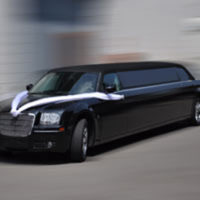 Each spring, high school students start planning for proms, a big event that seems to become more involved each year. In addition to getting a date, buying a gown and tux, taking pictures, and planning for the after parties, hiring a limousine to transport the prom goers is often part of the preparations.
Oftentimes, large groups share a limo to save on money and add to the party atmosphere. With all the details that go into this night, some may neglect to properly research the limo company, potentially putting themselves in danger.
Limousine Crashes
Limousines are not only used for proms; they are rented for parties, airport rides, and for many other reasons. The rider’s safety rests largely on the limo driver, who could be distracted, inexperienced, or even intoxicated.
Last fall, 20 people lost their lives in a horrific limo accident in Schoharie, New York. While on its way to a party, the stretch SUV ran through a dangerous intersection, crossed a highway, and hit another vehicle that was in a parking lot. It also hit and fatally injured two pedestrians before it crashed into a ditch. Subsequent investigations found the vehicle was actually a modified Ford Excursion and had failed a safety inspection. Furthermore, the driver was not properly licensed.
Limousine Company Responsibilities
Limousine drivers must exercise caution and reasonable care while driving passengers to avoid accidents. Working long hours and dealing with factors like poor weather can affect driving abilities in some cases. This is why drivers have to be well-trained to operate these vehicles and must be attentive at all times. The limos also have to be properly maintained and pass inspections, as a tire blowout or mechanical problem such as defective brakes could easily cause a crash.
When a limo accident occurs, liability is determined in the same way as other traffic accidents, through evidence.
Choosing a Limo Company
The stretch SUV involved in the Schoharie crash was modified by being sawed in half, lengthened, and then refurbished inside. Chopping up vehicles in this way and putting them together with parts from other cars, trucks, or limos is very dangerous, according to the president of the National Safety Council. These refurbished vehicles do not always have factory-approved parts or safety equipment like seat belts and air bags. Prom goers who hire these companies are likely oblivious to all of this.
Families should take extra time to choose a properly licensed company that operates safe vehicles. Shopping around, doing research, and looking at the actual limo before the big night is recommended. This includes asking the limo company about their insurance policy and requesting a copy of it. If the company balks at this request, it may be time to find another one; a reputable company should have a solid policy with no fault provisions. This will cover passenger medical bills in case of an accident.
Wilmington Car Accident Lawyers at Jacobs & Crumplar, P.A. Recover Maximum Compensation for Victims of Negligence
If you have suffered injuries in any type of motor vehicle crash, contact the experienced Wilmington car accident lawyers at Jacobs & Crumplar, P.A. We will discuss your case with you and provide knowledgeable legal guidance. Call 302-656-5445 or complete an online contact form today. With offices in Wilmington and Georgetown, Delaware, we represent clients in Dover, New Castle County, and Sussex County.
Hyundai Develops First Multi-Collision Airbag System
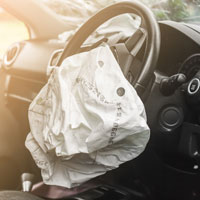 Hyundai is developing technology to improve the effectiveness of its existing airbag system. In response to studies that determine that many car accidents involve more than one collision, the Korean car manufacturer has announced its intention to redesign its airbag system to include additional airbag deployment in the event of a secondary crash.
To reduce injuries and fatalities, safety systems installed in cars today include airbags in the steering wheel, to protect drivers, and in the dashboard, to protect passengers. Side-impact airbags have been implemented to provide protection when the force of a crash comes from the side of the vehicle. However, all airbags are deployed upon the initial impact of an accident, thus leaving vehicle occupants unprotected in subsequent impacts.
Data announced by the National Highway Traffic Safety Administration (NHTSA) indicated that 30 percent of car accidents involve more than one collision. Hyundai took the initiative to investigate ways to address the problem.
Instances of Multi-Collision
A multi-collision car accident is defined as a crash that involves more than one impact. This happens in the case of a pile up, when one car hits the car in front of it and is then hit by the car behind. In a more terrifying instance, it also occurs when a car is rammed off the road into a roadside object, into another vehicle, or into oncoming traffic.
Secondary Safety
Hyundai’s intention is to integrate additional airbag deployments to protect passengers when a car accident becomes a multi-crash incident. The company’s safety experts recognized that its airbag system exhausted all its protection on the initial impact, even though the secondary impact is often more fatal.
Designers were wary of simply redeploying the airbags, so they plan to make the secondary activation more sensitive. The new designs will consider that these impacts may happen in rapid succession, so the airbags will be quick reacting. The system will also account for the position of the car’s occupants. The design will use sensors to activate airbags in the areas that will best protect the driver or passengers.
Innovative Endeavors
Hyundai intends for the new technology to become part of the safety system in future Hyundai and Kia vehicles, but there is no official date for its implementation.
This is not the first time Hyundai has introduced a revolutionary idea to protect the occupants in its vehicles. Back in 2018, the car manufacturer responded to the risks of roll-over accidents by proposing a design involving an airbag tucked into the sunroof of some of its vehicles. Like the sensors envisioned to predict occupant positioning in the multi-collision solution, the sunroof airbag system was designed to detect the vehicle’s upside-down position.
Wilmington Car Accident Lawyers at Jacobs & Crumplar, P.A. Represent Injured Car Accident Victims
If you or a loved one has been injured in a car accident, reach out to the Wilmington car accident lawyers at Jacobs & Crumplar, P.A. Call us at 302-656-5445 or contact us online for a free consultation. Our offices are in Wilmington and Georgetown, Delaware, where we represent car accident victims throughout Dover, New Castle County, and Sussex County.
Truck Accidents Increase During the Holidays
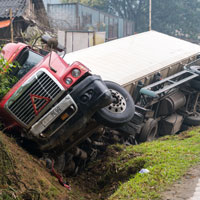 Spending time with family, attending holiday parties, volunteering, and going to the mall are all part of that favorite time of year: the holiday season. It all starts on Black Friday and runs full force until January 2.
All these festivities and errands lead to increasing amounts of cars and trucks on our roads. Unfortunately, this causes more traffic accidents during the holidays than other times of year.
Cities and neighborhoods are full of all kinds of freight and delivery trucks throughout these months. The Washington Post has reported that the USPS delivers close to 600 million packages, and that FedEx transports around 300 million throughout the holiday season. A corresponding spike in the amount of freight truck crashes shows a higher accident risk, which is around 10 percent.
Dangerous Truck Drivers
The trucking industry has a reputation for encouraging its drivers to work long hours. Without proper rest, serious driver fatigue can occur. During this time of the year, drivers have especially busy schedules, and can end up working more hours than usual.
The Federal Motor Carrier Safety Administration (FMCSA) regulations state that a driver cannot work more than 70 hours over seven days. Companies and their drivers may not monitor or enforce this law, especially if they are trying to meet delivery deadlines.
Another factor that causes truck accidents is bad weather. Late November and December can be rainy, snowy, and/or windy, and poor driving conditions also contribute to more crashes. If a driver is not well-trained, they can easily lose control of their truck.
Companies may hire extra drivers during the season to keep up with the workload. If they cannot find qualified ones, they may hire those with less experience.
Practice Safe Driving Around Trucks
Even if the weather is fine, it is always smart to decrease speed when driving near a truck. Tailgating them or passing at unsafe speeds is very hazardous. It is easy to get caught up in holiday stress; but aggressive driving around these large vehicles is a recipe for disaster.
These trucks also have large blind spots, which should always be avoided. They are located directly behind and directly in front of the truck, and next to both of the doors of the truck’s cab.
The most important safety recommendation for holiday driving around trucks is to keep a good distance. Driving alongside of one should never be done for more than a few minutes. If the truck driver indicates that the truck is going to move into another lane or merge, they should be given extra room by other drivers.
These trucks also need extra room to stop; if they brake suddenly, they can cause a collision. For example: If there is unexpected debris in the road, it would take a tractor trailer much longer to slow down to avoid a crash. A tailgating, speeding car behind it could easily crash into the back of the truck, causing a serious or even fatal accident.
Wilmington Truck Accident Lawyers at Jacobs & Crumplar, P.A. Help Truck Accident Victims
Even the safest drivers can become involved in truck accidents during the busy holiday season. For effective legal representation, truck accident victims can contact a knowledgeable Wilmington truck accident lawyer at Jacobs & Crumplar, P.A. Call us at 302-656-5445 for a free evaluation, or complete an online form. We have offices in Wilmington and Georgetown, Delaware, and fight for clients throughout Delaware, including Dover, New Castle County, and Sussex County.
Self-Driving Car Crash Concerns
 Autonomous cars are becoming more prevalent on American roadways. It is no surprise that as we struggle to adapt to this new technology, accidents will happen. Many argue that the technology is developing faster than the law can keep up. Who is to blame when a self-driving car is involved in an accident? The time-tested framework for assigning liability for negligence and coverage through large insurance companies is being tested.
Because autonomous cars do not act the same way as “regular” cars driven by people, it can be difficult for authorities to investigate who is to blame for the accident. A 2017 accident involving a self-driving car has brought some of these problems to light.
A plaintiff motorcyclist claims that he was driving behind one of GM’s autonomous vehicles, a Chevrolet Bolt, when the car changed lanes and veered to the left. The car had a human “back-up” driver sitting behind the wheel, as required by California state law. When the car changed lanes and the cyclist pulled forward, the Bolt suddenly swerved back into the lane. The cyclist claims he was knocked off of his bike and onto the ground.
The San Francisco Police investigated the motorcycle accident and issued a report. They cited the Plaintiff cyclist for passing a vehicle on the right. The Plaintiff has retained an attorney, who says that GM should be held responsible, because his client was just innocently traveling down the road when he was struck.
GM has acknowledged that the car was in self-driving mode and aborted the lane change. However, the company notes that the motorcyclist was riding between two lanes—known as “lane-splitting.” Although this is not illegal in the state of California, the Defendants claim the man lost his balance when he saw the car heading back into his lane and simply fell.
Responsibility and Blame
Many speculate that companies like GM who manufacture autonomous vehicles are likely to quickly settle any cases where it appears that the technology may be at fault. A Stanford researcher and University of South Carolina School of Law professor has opined that if there are cases where the driver of the non-autonomous vehicle may have been to blame, it is expected that automakers will vigorously fight those lawsuits to protect their image.
For numerous reasons, accidents involving self-driving cars may be difficult to investigate. However, an experienced Wilmington car accident lawyer may be able to obtain data, including video and driving information culled from the computer technology of autonomous vehicles to help determine who is responsible.
The proliferation of self-driving cars could easily change the nature of driving across the nation. As such, how accidents will be handled will almost certainly change with it.
Wilmington Car Accident Lawyers at Jacobs & Crumplar, P.A. Represent Clients Injured by Autonomous Vehicles
If you were struck by a self-driving car, whether you were on foot, on a bike, on a motorcycle, or a driver or passenger in another car, you may be entitled to compensation for your injuries. The experienced Wilmington car accident lawyers at Jacobs & Crumplar, P.A. can help you determine your legal options in this rapidly evolving area of the law and help you pursue your claim. To schedule a free consultation, call us today at 302-656-5445 or contact us online. We proudly represent car accident victims throughout Delaware, including the communities of Wilmington, Dover, and Georgetown, Delaware.
Drowsy Driving Risks in the Ridesharing Industry
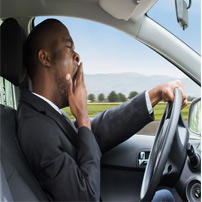 Many individuals now turn to ridesharing companies such as Lyft or Uber for their transportation needs. As independent contractors, the majority of ridesharing drivers are not screened for potential medical problems or tracked with respect to the number of hours they have been driving. This has resulted in an increasing public safety risk due to drowsy driving.
Drowsy driving occurs when a driver operates their vehicle under a state of extreme fatigue or sleepiness. Signs of drowsy driving can include a driver’s inability to keep their eyes open, extended periods of eye drooping, and drifting from one lane of traffic into another.
The Centers for Disease Control and Prevention (CDC) estimates that one in 25 drivers over the age of 18 have fallen asleep behind the wheel during the previous 30 days.
According to the AAA Foundation for Traffic Safety, drowsy driving was a factor in serious car accidents resulting in at least 6,400 deaths last year. Over 320,000 traffic accidents in the United States each year are attributed to drowsy driving. The CDC believes drowsy driving is underreported, and thus these numbers are, in fact, higher.
Potentially Higher Risks for Rideshare Drivers
Ridesharing drivers can be particularly susceptible to drowsy driving. Many rideshare drivers operate their vehicles after extended periods of wakefulness or during the night, two of the risk factors for drowsy driving. This can lead to fatigue and sleeplessness – the primary causes of drowsy driving.
Ongoing medical conditions such as sleep apnea may also contribute to drowsy driving. Since ridesharing drivers often are not screened for medical conditions, this also increases the risk to public safety.
The American Academy of Sleep Medicine recently published a position statement in the Journal of Clinical Sleep Medicine highlighting the inherent safety risks in the ridesharing industry. Their position statement calls for a collaborative effort among ridesharing companies, government agencies, medical professionals, and law enforcement to reduce the public safety risk created by drowsy driving.
Addressing the Concerns
Ridesharing companies have begun to respond to the problem of drowsy driving. Lyft drivers must now take a six-hour break for every 14 hours of driving time. Uber requires its drivers to go offline for six consecutive hours after 12 hours of total driving time. It remains unclear how effective these limits will be, however, as many ridesharing drivers work for more than one ridesharing company.
Wilmington Car Accident Lawyers at Jacobs & Crumplar, P.A. Assist Victims of Drowsy Driving Accidents
If you or a loved one has been injured as a result of drowsy driving, compensation may be available. The experienced Wilmington car accident lawyers at Jacobs & Crumplar, P.A. work with drowsy driving accident victims to help them obtain the maximum compensation possible. We have offices conveniently located in Wilmington and Georgetown, Delaware to serve clients throughout the state. Contact us online or call us at 302-656-5445 to schedule a free consultation.
Teens and Distracted Driving Accidents
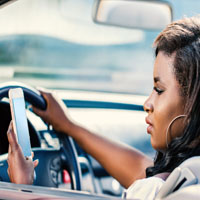 Distracted driving accidents are the cause of approximately nine fatalities and more than 1,000 injuries daily, according to the Centers for Disease Control and Prevention (CDC).
Drivers face three types of distractions on the road: visual, manual and cognitive. Visual distractions are anything that causes a driver to take their eyes off the road; manual distractions cause a driver to take their hands off the wheel; cognitive distractions are anything that takes a driver’s mind off driving.
Texting and Driving
Texting while driving is particularly dangerous, because it is a visual, manual, and cognitive distraction. According to the National Highway Traffic Safety Administration (NHTSA), 481,000 drivers use cell phones while driving during daylight hours.
When drivers read or send a text, they look away from the road for about five seconds, which is long enough to drive the length of a football field if the driver is going 55 miles per hour.
Studies Reveal Teens are at Risk
The NHTSA reports that 3,450 people were killed in distracted driving accidents in 2016 alone. Teens represent the largest age group in fatal distracting driving accidents. In 2015, a CDC national Youth Risk Behavior Surveillance System (YRBSS) report found that 42 percent of high school students who drove in the last 30 days had sent an email or a text while driving.
A study by the Virginia Tech Transportation Institute found that for drivers who text while driving, crash risk is increased 23 percent, as compared to drivers who are not distracted. Of the drivers aged 18 to 20 who survived a car accident and participated in the study, 11 percent admitted to reading or typing a text at the time of the accident.
Many states have laws banning texting for drivers 21 and younger. However, another study published in the Journal of Adolescent Health reports that approximately 2 out of 5 teenagers, aged 14 to 19, texted while driving at least once in the month prior to the survey.
The highest prevalence of teen texting and driving was 64 percent in South Dakota, and the lowest was 26 percent in Maryland.
Teen Driving and Texting
In five states, over 50 percent of teens aged 15 or younger with a learner’s permit reported texting and driving. The study’s lead author says he is not surprised by this, because graduated driver’s licensing laws typically allow teens to start driving at age 15. The study also found that teens who have a habit of wearing their seatbelts were 21 percent less likely to drive and text than those who do not.
Risky driving behavior, such as not wearing a seatbelt and texting while driving, occur less frequently when there is an adult in the car, according to the senior epidemiologist at CDC’s Division of Unintentional Injury Prevention.
It is therefore important for parents to set a good example for teens, by not using the phone while driving, or while accompanying the teen as a passenger.
Dover Car Accident Lawyers at Jacobs & Crumplar, P.A. Help Those Injured in Distracted Driving Accidents Get Compensation
If you were injured in a car accident due to someone else’s negligence, contact a Dover car accident lawyer at Jacobs & Crumplar, P.A. We represent clients throughout Delaware from our offices in Wilmington and Georgetown. Contact us online or call us at 302-656-5445 to schedule a free consultation.
Too Fast Vs. Too Slow Drivers
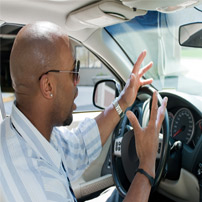 The Delaware legislature has recently debated the issue of what type of driver is more dangerous: The debate centered around whether the more dangerous driver is one that drives too fast or one that drives too slow, specifically in the left lane.
Although currently the legislature has not yet begun to study the issue, a resolution was introduced in the state Senate. The resolution was to study whether slower traffic in the left lane causes more accidents than drivers who are speeding on the same highway. That particular resolution, while it passed the state Senate unanimously, because it was introduced on the last day of the legislative session did not make it to the House. It will likely resurface when the legislature reconvenes.
Studying the Issue
If the measure passes, the Delaware Department of Transportation and Delaware State Police will be required to examine the issue more in-depth. While how they will study the issue is not yet known, it will be interesting to learn whether the majority of car accidents on Delaware highways are caused by speeding or driving too slowly.
How the police will categorize the accidents may prove difficult, especially if the accident involved a speeding driver and a driver who was meandering along in the left lane.
This is an interesting time to be studying this issue, especially since the number of driving deaths in the state of Delaware have been decreasing since 2015. In 2017 there were 110 traffic deaths in the state, compared to 120 in 2016 and 133 in 2015.
Additionally, out of 26,453 traffic crashes in 2016, speeding was a contributing factor in only 239 of them. Only nine of those crashes were fatal.
Further, out of the 120 fatalities that occurred in 2016, seven of them were attributed to driver inattention, distraction, or fatigue; whereas reckless driving or aggressive driving was a factor in five of out of the 120.
Therefore, there are about one hundred accidents where the causes were not distraction, recklessness, or speeding. This could suggest that better records need to be kept at the state level to determine why there were over 100 fatalities in 2016 not related to any of these prominent issues. It could, in fact, be that some of the accidents were related to too-slow driving.
Drivers Weigh-In
After the legislature discussed this issue, some drivers weighed in and said that they do not move over from the left lane for faster drivers, since there is no current law requiring it. Some drivers felt that the real danger is speeding drivers who may make unsafe lane changes at high speeds.
A state police spokesperson said that speeding is a major concern along the state’s busiest highway, which is Delaware 1. Further, this is especially problematic during beach season.
Delaware Car Accident Lawyers at Jacobs & Crumplar, P.A. Help if You Have Been in a Car Accident
Whether your car accident was due to speeding, a slow driver, or distracted driving, the Delaware car accident lawyers at Jacobs & Crumplar, P.A. can assist with your case. Contact us online or call us at 302-656-5445 to schedule a free consultation today. We have offices conveniently located in Wilmington and Georgetown, and our attorneys serve clients throughout Delaware, New Jersey, and Pennsylvania.
Delaware Road Deaths Outpacing 2017
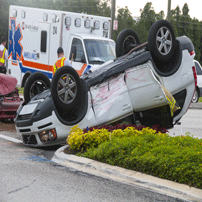 Delaware Office of Highway Safety statistics show the number of Delaware roadway fatalities in 2018 is outpacing last year’s numbers – much to the concern of Delaware officials. At a similar point last year, accident fatalities in Delaware totaled 47. So far this year, at least 61 people have lost their lives in auto accidents. Only 2016 saw a higher number of highway fatalities for this time period at 67. Each year, more than 100 people are fatally injured in wrecks on Delaware roads. Should this trend continue, the number of Delaware accident fatalities will likely exceed last year’s total of 118.
Researchers suggest several possible causes for the rise in the number of fatal accidents. Increased traffic volumes and the prevalence of distracted driving behaviors may be contributing factors. Distracted driving behaviors can include talking or texting on cell phones, interacting with a car’s infotainment systems such as the radio or navigation systems and engaging in personal grooming tasks such as brushing hair or applying makeup.
Fatal Accidents Spike in Summer
Summer is an especially dangerous time in Delaware as out-of-state drivers fill the roadways. Delaware beaches remain a popular vacation spot for many vacationers. Several of the fatal accidents involved out-of-state residents. In early July, a New Jersey family’s Ocean City, Maryland vacation ended in tragedy as a father and his four daughters were fatally injured in a head-on collision. In a separate hit and run incident, a Pennsylvania man also was killed on a Delaware roadway last month.
Weekends are an especially dangerous time on Delaware roadways. Almost half of the deadly crashes that occurred in Delaware last month took place in the time period between Friday afternoon and Monday morning.
This year’s fatal motor vehicle accidents include the following circumstances:
- Motorist being struck by a passing vehicle on Interstate 494 after exiting his car to make a phone call
- Hit and run of a bicyclist riding on shoulder of South DuPont Highway
- Speeding motorist failing to negotiate a curve on Ralph Road
- Motorcycle crash in Laurel
- Motor vehicle collision on Millsboro Highway and Nine Foot Road
- Flaming single car wreck on Concord Pike north of Wilmington
- Heavy duty pickup truck crossing center median on Delaware Route 1 colliding with minivan
- Collision between a burglary suspect and state police trooper in Milton
Delaware drivers are most often cited as being at fault in these fatal accidents. Office of Highway Safety statistics show for the time period 2011-2017, Delaware drivers were found at fault in 84 percent of fatal motor vehicle accidents. While that number decreases slightly in the summer months to between 71-79 percent, the majority of drivers involved in the fatal crashes are Delaware residents.
The Delaware Department of Transportation continues to evaluate all factors involved in these highway deaths in its continuing effort to make Delaware roadways safer. In the case of the tragic five-fatality minivan crash, the collision occurred on a section of Delaware Route 1 that lacked guardrails. In response, the Department of Transportation has announced a plan to install barriers at the site. Police pursuit polices also are being scrutinized as result of the bicycle accident that claimed a life in Milton.
Delaware Car Accident Lawyers at Jacobs & Crumplar, P.A. Handle Fatal Car Accident Claims
If you have been seriously injured or suffered the wrongful death of a loved one in a car accident, the experienced Delaware car accident lawyers at Jacobs & Crumplar, P.A. are here to assist you in obtaining the maximum compensation possible. With offices conveniently located in Wilmington and Georgetown, Delaware, we proudly serve clients throughout the state. To schedule your free confidential consultation with a Delaware car accident lawyer, call us today at 302-656-5445 or contact us online.
Prevent Swimming Pool Electric Shock
 As summer begins, families across the country will retreat to their backyards and community swimming pools to have fun and cool off. Swimmers need to know that drowning is not the only danger when it comes to swimming pools. When a body of water becomes charged with electricity, swimmers are at risk of serious injury and even death.
Swimmers can, at the very least, experience electric shock. In more severe cases, electric shock can lead to drowning, and thus be fatal.
Learn to recognize the signs that the water has been electrically charged, and how to prevent electrocution in the lake or swimming pool.
How water becomes energized
The risk of electric charged water exists wherever an electrical device is close enough to fall or be pulled into the water. When an electrical component near the water is faulty or damaged, electricity can enter the water, creating an invisible and potentially fatal electric current.
When the human body comes in contact with energized water, they can suffer symptoms ranging from tingling to paralysis and cardiac arrest. The risk to swimmers really depends upon the level of the current in the water.
Signs that water may be electrified
The physical signs a swimmer may experience, telling them that water may be electrically charged, include:
- Muscle cramps
- Tingling sensation
- Skeletal muscular paralysis
When electric shock causes the inability to move, swimmers are unable to help themselves and are at risk of drowning. The American Red Cross recommends keeping a fiberglass rescue hook near your swimming pool to rescue swimmers. In many cases, swimmers may not immediately feel an electric current when they enter the water. Electricity can often be intermittent, occurring as an electrical device cycles on and off.
Preventing swimming pool electrocution
There are several ways to prevent swimming pool electric shock and electrocution. The first step is to have a certified electrician install, maintain, and repair any electric components in and around your swimming pool.
Once installed, inspect all electric devices, including pool lights and pumps, on a routine basis for wear and tear, frayed wires, or any signs of damage that may cause electricity to come in contact with water.
Your certified electrician will install Ground-fault Circuit Interrupters (GFCI), special safety devices installed directly on your outlets that shut off electricity anytime a change in current is detected in water.
If you do see damage to electric devices, assume there may be an electrical current in the water, and stay out of the pool until you call an electrician.
Wilmington Personal Injury Lawyers of Jacobs & Crumplar, P.A. Fight for Victims Injured in Swimming Pool Accidents
Summer is a time for fun, relaxation, and outdoor adventures. The risk of injuries caused by a swimming pool accident, slip and fall, or motor vehicle crash is an unfortunate reality. If you or a family member has been injured in a preventable accident caused by a negligent property owner or defective product, the Wilmington personal injury lawyers of Jacobs & Crumplar, P.A. are here to help.
Contact us online or call 302-656-5445 to schedule a free consultation today. Our offices are located in Wilmington and Georgetown, and our attorneys serve clients throughout Delaware, New Jersey, and Pennsylvania.
AAA Study on Distracted Driving
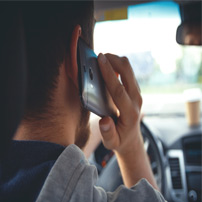 A new American Automobile Association Foundation (AAA) survey shows that while most drivers are aware of the dangers associated with distracted driving, it does not stop them from engaging in risky driving behaviors themselves. The Traffic Safety Culture study involved 2,613 drivers age 16 and older who reported driving in the last 30 days. It was designed to reveal drivers’ attitudes and behaviors related to traffic safety. The AAA Public and Government Affairs Manager says the results are extremely troubling.
While 88 percent of drivers believe distracted driving is on the rise, the number of drivers who reported using a cellphone while driving is up 46 percent since 2013. Although 58 percent believe talking on a cellphone is a very serious threat to personal safety, and 78 percent believe texting is a significant danger, 49 percent reported talking on a hand-held phone while driving and 35 percent reported sending a text or email while driving.
Fatalities in Delaware and Nationwide
According to the Delaware State Police, there were 6,095 car accidents in 2016 that involved a distracted driver, seven of which were fatal. These crashes accounted for 23 percent of all reportable traffic crashes and 6 percent of all fatal crashes, respectively.
The number of motor vehicle fatalities remains high nationwide. The 2017 National Safety Council (NSC) preliminary estimates show that there were more than 40,000 motor vehicle deaths for the second year in a row. This is 6 percent higher than the number of deaths in 2015, and costs associated with these accidents amount to a whopping $413.8 billion.
Distracted Driving Awareness
April was Distracted Driving Awareness Month, an annual event during which the NSC, along with other organizations and individuals, attempt to raise awareness regarding the increasing epidemic of distracted driving.
To decrease preventable deaths and ensure safer roadways, the NSC recommends that drivers:
- Wear seatbelts
- Do not drive while fatigued
- Drive sober
- Avoid distractions
Distracted Driving Statistics
The National Highway Traffic Safety Administration (NHTSA) reports that 3,477 people were fatally injured in distracted driving accidents in 2015 alone. However, this may be a conservative estimate, according to the AAA. Because distracted driving is difficult to detect after a crash (compared to drunk driving or driving while under the influence of drugs, for example), it is one of the most under-reported traffic safety issues. According to a past AAA study involving dashboard camera videos, distraction was a factor in 58 percent of crashes, not 14 percent as federal estimates suggest.
The AAA Foundation reports that drivers who talk on a cellphone are up to four times more likely to crash; and those who text are up to eight times more likely to crash. With cellphones, dashboard infotainment systems, voice command features, and other emerging technologies, the number of distractions for drivers is increasing.
Georgetown Car Accident Lawyers at Jacobs & Crumplar, P.A. Represent Those Injured in Distracted Driving Accidents
If you were injured in a car accident caused by someone else’s negligence, you may be entitled to compensation for your injuries. The experienced Georgetown car accident lawyers at Jacobs & Crumplar, P.A. represent clients throughout Delaware from our offices in Wilmington and Georgetown. Contact us online or call us at 302-656-5445 to schedule a free consultation.