



Memorial Day Safe Driving Tips
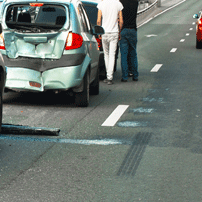 Are you celebrating the unofficial start of summer by traveling to your favorite vacation spot, or to a family barbeque in another state? If so, you are not alone. Memorial Day weekend has become one of the most heavily travelled weekends of the year. The American Automobile Association (AAA) expects 36.6 million drivers on the road over the holiday weekend. That is an increase of 4.7 percent over the 2017 numbers.
The following are some simple driving tips to ensure a safe holiday weekend:
Properly Maintain Your Vehicle
Preventing a serious motor vehicle accident often can be as simple as properly maintaining your car or truck. By making sure your tires are properly inflated, your windshield wipers are functioning, windshield fluid is adequate, and the brake fluid is filled, you significantly reduce the risk of a car accident. Working headlights and taillights also are important for any extended road trip. Avoid letting a gas tank get too low.
Part of proper maintenance should also be checking to make sure that you understand how to use all of your vehicle’s safety features, such as the adaptive cruise control, the blind spot warning system, and backup cameras.
Do Not Mix Alcohol and Driving
Driving a vehicle after consuming alcohol or drugs is never a good idea. With an average of 30 deaths attributed to drunk driving accidents each day, the risks of getting behind the wheel of a motor vehicle after drinking are well documented. Since many Memorial Day celebrations include alcohol, plan ahead to stay the night or designate a sober driver to ensure that no one drives after drinking even one alcoholic beverage.
Avoid Drowsy Driving
Drivers must be aware of their level of tiredness before operating their vehicles. Drowsy driving can result in serious accidents when a driver even temporarily closes their eyes or loses focus. Watch for cars drifting into the shoulder or into other traffic lanes, as these are usually signs of drowsy driving.
To avoid becoming a drowsy driver yourself, get plenty of rest before traveling, drink lots of water, and take frequent breaks while driving long distances.
Apply Good Driving Practices
In situations where road traffic is heavier than usual, relying on good driving practices becomes essential. Safe drivers ensure themselves and their passengers are wearing seatbelts. Over 150 lives would be saved alone with proper seatbelt use.
Leave plenty of room when following another vehicle; follow posted speed limits; and avoid distractions, including cell phones, while operating your vehicle. Even a hands-free device can pose serious safety risks, due to distracted driving.
The use of child restraint safety seats is another good driving practice that can prevent serious injuries. Proper child restraint systems must be appropriate for the child’s height, weight and age.
According to the National Safety Council, injuries and fatalities that occur during holiday weekends continue to rise every year on the average of 6-14 percent. While such trends continue, drivers should apply all of these safe driving tips this Memorial Day weekend.
Wilmington Car Accident Lawyers at Jacobs & Crumplar, P.A. Want You to Drive Safely This Holiday Weekend
Even the safest drivers may find themselves involved in a serious motor vehicle accident. If you or your loved one has been injured in a car accident caused by another driver’s negligence, an experienced Wilmington car accident lawyer at Jacobs & Crumplar, P.A. will help you recover maximum compensation for your injuries. With offices conveniently located in Wilmington and Georgetown, Delaware, our attorneys are proud to represent car accident victims throughout Delaware. To schedule your free confidential consultation call us at 302-656-5445 or submit an online inquiry form.
Crash Test Focuses on Passenger Safety
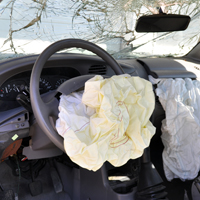 The Insurance Institute for Highway Safety (IIHS) has many rigorous tests that determine its safety ratings for the more than 200 models of cars and trucks available to consumers. Vehicles must prove their crashworthiness in tests of how well the front and sides protect their occupants. Other factors such as roof strength and head restraint performance are tested as well. In another measure of safety, a small overlap frontal crash test simulates what happens when the driver’s side of the vehicle hits a pole or tree.
This offset test proved difficult for a number of vehicles when it was first introduced five years ago. The results spurred automakers to make improvements such as extending bumpers, providing larger side-curtain airbags, and strengthening the passenger compartments.
New IIHS Crash Test
The success of these safety improvements to the driver’s side brought to light the fact that now passengers in the front need similar protections. To that end the IIHS has a small overlap test for the passenger side of vehicles. Overlap tests are more rigorous than direct frontal crash tests and show the effectiveness of the airbag, seatbelt, and outer edges of the car not included in the crush zone.
Top Ten Midsize Cars
The passenger side small overlap test was first used on 13 models of midsize cars. Of these, 10 vehicles earned a rating of good. Two, the Volkswagen Passat and Chevrolet Malibu, achieved only marginal results, and the Volkswagen Jetta was deemed acceptable. The 10 cars receiving good marks were as follows:
- 2018 models: Subaru Legacy, Subaru Outback, Toyota Camry
- 2017 models: Ford Fusion, Honda Accord, Lincoln MKZ, Hyundai Sonata, Mazda6, Nissan Altima, Nissan Maxima
Critics of the test say that the IIHS is supported by the insurance industry, which has an interest in reducing claim costs. They note that while offset collisions can produce serious lower body injuries, they are not a major cause of fatalities. However, senior engineers at IIHS see passenger head protection as an urgent safety issue. Passenger test dummies in the Passat and Malibu, the cars that received marginal grades, slid off the front airbag and hit their heads on the dashboard during the offset collision test. Optimizing the seatbelt and airbag performance could prevent this. In comparison, the Subaru models were particularly effective in protecting passengers, showing low-risk of injury in a real-life crash.
More cars will undergo the new test in the coming months and the results will be available on the IIHS website. Crash tests are useful not only for determining which cars and trucks are safest, but also to root out defects so that they can be addressed and improved, thus avoiding recalls and product liability lawsuits for carmakers.
Wilmington Personal Injury Lawyers at Jacobs & Crumplar, P.A. Represent Those Injured by Defective Products
If you have been injured in a car accident caused by a product defect, you may be entitled to compensation. Contact the experienced Wilmington personal injury lawyers at Jacobs & Crumplar, P.A. to review your legal options. Call 302-656-5445 today or complete our online contact form to schedule a free consultation. From our Wilmington and Georgetown offices, we proudly represent clients throughout the state, including those in Dover, New Castle, and Newark, Delaware.
Bridgeville Car Accident Fatally Injures Maryland Man
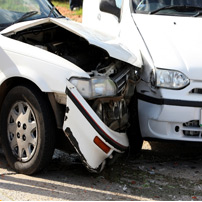 A man sustained fatal injuries after a car accident in Bridgeville, Delaware on Sunday night. Just after 11 pm, the fatal car crash occurred when a sedan traveling at a high speed was hit by another car on the left front and side of the sedan. The 30-year-old man from Stevensville, Maryland who was driving the car that was struck succumbed to his fatal injuries at the scene of the Bridgeville car accident while the 18-year-old woman driving the other vehicle exited the crash without any personal injuries.
Excessive speed may lead to serious accidents on the road, whether the highway is deserted or congested. Any parties involved in the collision may incur a spate of injuries or even fatalities. Other contributing factors in a car accident may include drowsy driving, intoxicated driving, or texting while driving.
If you or your loved ones have been seriously injured in a car accident, the Georgetown car accident lawyers at Jacobs & Crumplar, P.A. will assist you. To arrange a free consultation, contact us online or call 302-656-5445. From our offices in Wilmington and Georgetown, we represent individuals and families throughout the state, including those in Dover, Delaware.
Bicycle Friendly Delaware Act
 The bipartisan Bicycle Friendly Delaware Act signed into law last October establishes more rights for bicyclists in Delaware and includes some new rules for everyone. For instance, honking at cyclists is now banned, except for in cases of imminent danger, and cars must change lanes when passing bicyclists.
Most bike crashes occur at intersections. Two aspects of the Act address this issue directly. Bicycle traffic signals will now be adopted throughout the state by DelDOT. Another groundbreaking change is allowing bicyclists to yield at stop signs when the intersection is clear, instead of requiring a full stop at every stop sign, without exceptions. Idaho is currently the only other state that allows bikes to safely yield at an intersection, which enables them to maintain their momentum. Eight other states have attempted to pass similar legislation and failed.
Where to Ride
The Act also better defines where bicyclists should be on the road, further improving their safety in traffic. Previously, Delaware law stated that bikes must ride “as close as practicable to the right-hand edge of the roadway.” This ambiguous language did not allow for any safety variables, such as condition of the road. The new Act is more specific and says riders should be “far enough to the right as judged safe by the operator to facilitate the movement of such overtaking vehicles unless the bicycle operator determines that other conditions make it unsafe to do so.” Other clarifications allow bicyclists to ride two abreast within the lane in narrow lanes.
Collaboration with Law Enforcement
Delaware was able to pass the new legislation because it had the full support and involvement of the Delaware State Police, whose Traffic Unit contributed suggestions. The statewide advocacy group Bike Delaware was also a key collaborator in developing the language that eventually became law. Together the two groups tried to create laws that actually reflect how people act on the road. The police wanted rules that they could help enforce, and knew from experience what does not work. The executive director of Bike Delaware said that without police support it would have been impossible to move a safety bill forward.
The legislation’s co-sponsors were also co-sponsors of both Walkable Bikeable Delaware and the Healthy and Transit-Friendly Development Act.
Bicycle Safety Awareness
Now that Delaware has declared itself “bike friendly” with the new Act passed, it will be crucial to raise public awareness of the new rules. Delaware State Police have received training on the new laws, and Bike Delaware launched a statewide campaign to promote the Act. The Bicycle Friendly Delaware Act can only succeed if drivers, cyclists, and police all understand the new laws designed to keep bicyclists out of harm’s way.
Wilmington Personal Injury Lawyers at Jacobs & Crumplar, P.A. Recover Compensation for Injured Bicyclists
We all must share the road with bikes, but not every driver follows the rules of the road. If you have been injured in a bicycle accident caused by someone else’s negligence, call a Wilmington personal injury lawyer at Jacobs & Crumplar, P.A. We will evaluate your case for free and advocate on your behalf to achieve the best outcome possible for you. Call us today at 302-656-5445 or contact us online. From our offices in Wilmington and Georgetown we proudly serve clients in Dover and across Delaware.
Fatal Car Crash in Frederica Claims Woman’s Life and Injures Three
A fatal car crash that occurred in Frederica, Delaware, claimed a woman’s life and injured three other victims. Around 9:15 pm, on Sunday night, the fatal car accident took place when two cars entered the intersection of Bowers Beach Road and Bay Road, and one of the vehicles struck a sedan on the driver’s side. Both cars then spun out and crashed into the median from different directions. The 57-year-old woman from Felton, Delaware who was driving the struck car succumbed to her fatal injuries after being transported to the Bayhealth Kent General Hospital. A 43-year-old man from Essex, Maryland and his two passengers sustained a variety of personal injuries and received treatment at the same hospital after the fatal car crash.
Side-impact collisions commonly occur within intersections and could leave victims with many types of injuries and potential fatalities. Even with the utmost caution drivers may engage in crashes like this although oftentimes distracted driving, speeding, or failing to obey traffic signals may contribute to side-impact collisions. Debilitating pain and injuries may adversely affect the quality of life for survivors of a serious car accident and may interrupt in their ability to earn an income.
If you or your loved ones have been seriously injured in a car accident, the Georgetown car accident lawyers at Jacobs & Crumplar, P.A. will assist you. To arrange a free consultation, contact us online or call 302-656-5445. From our offices in Wilmington and Georgetown, we represent individuals and families throughout the state, including those in Dover, Delaware.
Daylight Saving Time Accidents
 Daylight saving time was begun with the idea that if clocks were turned an hour forward in the spring, we would have an extra hour of daylight in the evening. Turning them back in fall gives us an extra hour in the morning. Around the world, there are countries like Argentina and Russia, that used to use daylight saving time, but no longer do. Other countries, like China, have never used it at all.
In the United States, we still change our clocks every spring and fall; but now researchers are making the case that daylight saving time could be hazardous to our health. Accident rates are higher in the weeks that follow the time change, as are incidents of heart attacks. One study found a 6.3 percent in fatal car accidents over the six days after the clocks are changed.
Losing Sleep and Drowsy Driving
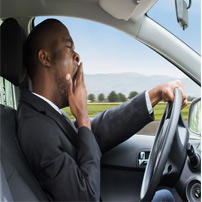
An hour of lost sleep may not sound like much. However, considering that some people only sleep five or six hours a night anyway, losing an hour puts them well under the recommended minimum of seven hours. Studies show that adjusting the body’s sleep cycle may take at least a week during which time people are at risk for drowsy driving. A sleep deprived driver has the same reduced function and slower reaction time as a drunk driver. These still-sleepy commuters also have to adjust to making their morning drive in the dark. The rate of pedestrian accidents is higher after clocks are changed for daylight saving time.
In the fall, even though we gain an extra hour of sleep, things are no better. In fact, some people think they have an extra hour to stay out drinking that weekend, thus raising their risk of being in a drunk driving accident and injuring other innocent drivers. New York City even launched a safety campaign aimed at reducing the number of car and pedestrian accidents following the daylight saving time change reminding city dwellers to be vigilant once daylight has faded. Truck accidents can also be a problem because their drivers have irregular schedules making it even harder to adjust to the change in time.
Stay Safe When the Clocks Change
Some would prefer to eliminate the clock change because the original argument about saving energy used to light homes by having more daylight hours really does not hold up anymore. However, at present in the U.S. everyone except for those living in Arizona and Hawaii must deal with the safety issues that arise twice a year due to daylight saving time. To minimize your risk of being in a car accident, get plenty of sleep the night before the time change. Be extra aware when driving, especially during the hours that are newly darkened. If you become drowsy, pull over and rest rather than drive while fatigued.
Wilmington Car Accident Lawyers at Jacobs & Crumplar, P.A. Represent Injured Victims of Drowsy Driving Accidents
Find out about your legal options from an experienced Wilmington car accident lawyer at Jacobs & Crumplar, P.A. if you have been injured in a car accident. We will seek maximum compensation on your behalf so that you can recover from your injuries. Call 302-565-5445 today or contact us online. With offices in Wilmington and Georgetown, we represent clients throughout Delaware.
Dover Car Crash Leaves Young Girl with Critical Injuries
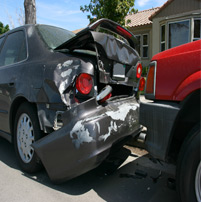 A car crash in Dover, Delaware left a young girl critically injured on Thursday night. Around 7:30 pm, the car accident occurred when a 39-year-old man from Ellendale, Delaware, who was driving under the influence of alcohol, slammed into a sedan that was stopped at a red light. The impact of the collision caused the sedan to hit a pickup truck. The woman driving the sedan sustained a head injury and received treatment at the Bayhealth Kent General Hospital while her 10-year-old daughter incurred serious injuries, needed to be transported to the Nemours Alfred I. DuPont Hospital for Children, and remains in critical condition. The driver of the pickup truck escaped the car crash without injuries.
When motorists engage in drunk driving or speeding, they may cause a serious car accident, which puts other drivers and their passengers at-risk for a range of personal injuries as well as potential fatalities. Negligent driving practices are a major contributing factor to many motor vehicle crashes. Survivors of this type of accident may face debilitating injuries, emotional and mental trauma, and mounting medical bills.
If you or your loved ones have been seriously injured in a car accident, the Delaware car accident lawyers at Jacobs & Crumplar, P.A. are here to assist you. To arrange a free consultation, contact us online or call 302-656-5445. From our offices in Wilmington and Georgetown, we represent individuals and families throughout the state, including those in Dover, Delaware.
Distracted Driving Study Results
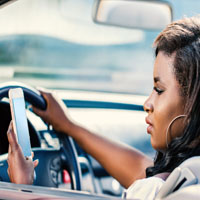 Smart phone usage behind the wheel has spun out of control in recent years. Distracted driving has been a major contributor in the overall rise of U.S. traffic deaths. In 2016, at least 40,200 people lost their lives on U.S. roads in preventable collisions, according to the National Safety Council. Studies reveal that a shocking 88 percent of drivers have used their phone while operating a vehicle. The study monitored three-million drivers over the course of three months, from December 2016 through February 2017.
The study, conducted by an app called Zendrive, took into consideration all forms of phone usage including navigation, social media, texting, and talking. Zendrive can detect the duration and frequency of phone usage since it operates off a smartphone. The data, said to be the largest distracted driving study to date, was then collected and analyzed. The outcome showed that drivers spent an average of three and a half minutes on their phones for every hour driven.
Some may agree that more driver awareness is needed. Drivers need to be informed that even seconds spent on a phone can have dire consequences. A 2-second distraction increases the likelihood for crashing by over 20-times. Texting behind the wheel makes it eight times more likely that an accident will occur. It is pertinent that addresses get plugged into GPS and music set prior to operating a vehicle to prevent potential deadly wrecks.
Even hands-free phone operation while driving increases the risk for accidents according to AAA. Phone usage causes people to take their mind, and not just their eyes off the road. A driver who is not paying attention is likely to miss pedestrians and other potential hazards surrounding them. This is a danger not only to the driver, but also to anyone in the vicinity.
Passenger phone usage is also a major distraction. Videos on someone else’s phone or having a conversation could cause a driver to divert his or her attention away from the road, leading to a deadly outcome. It is essential that drivers eliminate as many distractions as possible prior to their departure. Ask passengers to eliminate noise on their phones, and maintain focus on the road while talking to each other.
Georgetown Car Accident Lawyers at Jacobs & Crumplar, P.A. Successfully Represent Personal Injury Victims in Delaware
At Jacobs & Crumplar, P.A., we understand the pain and debilitating stress that comes from being hurt in a car accident. Financial distress should be the least of your concerns. Speak with an experienced Georgetown car accident lawyer today by calling 302-656-5445 or contact us online. We have convenient office locations in Wilmington and Georgetown to represent personal injury victims in upstate and downstate Delaware.
Safety Tips for Teen Drivers
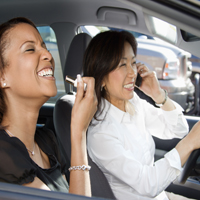 Most teens count down the days until they finally earn their driver’s license. Their parents are not always quite as enthusiastic however. The thought of their nervous and inexperienced teen on the road keeps plenty of parents up at night. Unfortunately, some of that worry may be warranted. New teen drivers are three times more likely to be involved in a serious or fatal car wreck than adults. The following are a few important safe driving tips you and your teen can adopt to make every trip a safe one.
Avoid Distractions
According to the National Highway Traffic Safety Administration (NHTSA), distracted driving car accidents claimed 3,450 lives last year. Most of the distracted drivers were teens. Surprisingly, cell phones are not the only culprit distracting young drivers, as passengers can be equally if not more distracting.
Fifteen percent of distracted driving accidents happened because the driver took their eyes off the road to interact with others in the car. Twelve percent of crashes involved the use of smart phones. Taking your eyes of the road or your hands off the wheel for even a few seconds is like driving blind-folded.
Buckle Up
The National Highway Traffic Safety Administration reports that of all teens aged (13-20) who died in car accidents in the year 2012, only 58 percent were restrained. Wearing a seatbelt not only saves your life but also saves the lives of your passengers. In an accident, an unrestrained body is a danger to others. Research shows the biggest indicator of teen seatbelt use is their parents’ seatbelt habits. Parents who model consistent seatbelt use during every car ride are more likely to have kids who do the same.
Slow Down
In 2015, speed was a factor in nearly one-third of fatal accidents involving teens. According to some studies, the tendency to speed increases the more teens drive. Teen drivers should understand how increased speed limits their reaction time and increases the risk of collision. Also important to stress – speed should be reduced in bad weather and around poor road conditions. There are also stiff legal and financial consequences for speeding.
For those times when parents are not around to supervise their teens, several smartphone apps help to encourage safe driving habits. Some apps block all emails and texts while teens are behind the wheel. Others record teen driver habits and reward good behavior. However, parents and other trusted adults are the best teachers when it comes to safe driving. Parents who drive alert, sober, and safe are likely to influence teens to do the same.
Car accidents are a leading cause of injury in the United States. Distracted driving, speeding, alcohol, bad weather, and poor road conditions can lead to serious and fatal crashes. Regardless of what caused your auto accident, you can find justice. The experienced personal injury lawyers at Jacobs & Crumplar, P.A. will assess your situation and recommend the best legal course of action to obtain compensation for your injuries.
Dover Car Accident Lawyers Jacobs & Crumplar, P.A. Advocate for Injured Car Accident Victims
To schedule your free consultation with an experienced and compassionate Dover car accident lawyer, complete our online contact form or call 302-656-5445 or 800-355-1818 today. Jacobs & Crumplar, P.A. has office locations in Wilmington and Georgetown to serve residents throughout the state of Delaware.
Car Wrecks Jump During Snow Fall
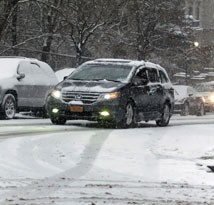 When winter hits, precipitation means more car accidents. It does not have to be a major accumulation, just enough snow, sleet, or ice to make things slick and slippery. According to the Federal Highway Administration, weather is a factor in 24 percent of all vehicle crashes. The area has already been hit with multiple weather events this year and predictably, the number of wrecks and the number of injuries were higher during the weeks with snowfall.
Delaware State Police Spokesman Master Cpl. Mike Austin says that when bad weather is in the forecast, state police advise people to stay home and postpone their travel plans. Even if you are accustomed to driving in snow, many people are not – putting you at risk being involved in an accident. Troopers receive the most calls for help with disabled or abandoned vehicles and vehicle crashes. All of these pose a major problem for DelDot efforts to remove snow and keep the roads clean and safe for those who must travel.
Be Prepared
Recent winter weather had the AAA out rescuing more people than usual. The main problems were dead batteries and tire servicing. The agency reminds motorists that existing car problems can become worse in cold weather. A weak battery is likely to die in the cold, tires will have less air pressure and reduced traction on snowy or icy roads, and old wipers will not be able to clear the windshield at a time when visibility will be lower than normal anyway.
Maintenance that should be done well before a winter weather emergency includes checking fluid levels and adding anti-freeze, oil changes, and assembling an emergency kit. Emergency supplies like jumper cables, blankets, extra food and water, a flashlight, batteries and charging cables, and a first aid kit, should always be on hand.
Drive Defensively
In winter weather conditions it is imperative to practice defensive driving. Leave plenty of time to reach your destination and plenty of room between your car and the car in front of you. Stopping distances increase when roads are slippery. Use caution when approaching an intersection and do not turn or brake suddenly as this could cause the car to skid or fishtail.
If you do get stuck in snow and cannot move your car away from the traffic flow, wait for help to arrive and do not leave your vehicle and attempt to dig yourself out. You could be seriously injured on the side of the road by a car that loses control. As you wait, make sure that your tailpipe is not blocked by snow or slush or you could be poisoned by exhaust fumes.
Winter weather increases the risk of being injured in a car accident. Common injuries include head and neck injuries such as whiplash, broken bones, and herniated disks. Stay safe this winter by following Delaware State Police advisories for road conditions and by preparing your vehicle for winter conditions.
Georgetown Car Accident Lawyers at Jacobs & Crumplar, P.A. Help Those Injured Because of Driver Negligence
If you are suffering from injuries sustained in a car accident that was caused by the negligence of another person, you may be entitled to compensation. Consult with a dedicated Georgetown car accident lawyer at Jacobs & Crumplar, P.A. who can help you determine your legal options and recover compensation. Contact us online or call 302-656-5445 today to schedule a free consultation. From our offices in Wilmington and Georgetown, we serve clients in Dover and throughout the state of Delaware.