



Contamination at Dover Air Force Base
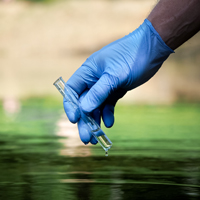 The Dover Air Force Base is among several local military sites that have extraordinarily high levels of ground water contamination from two perfluorocarboxylic acids (PFCs). Measurements of two such chemicals, PFOA, a perfluorocarboxylic acid, and PFOS, a perfluorosolfonate, were as high as 254,000 times the limit of 11 parts per trillion (ppt), which one Federal agency deems necessary for drinking water to protect public health.
Two sites near Wilmington had similar results. New Castle Air National Guard Base was tested at 758 times the recommended limit while the Marine Corps Reserve Training Center was tested at 176 times the recommended limit. The findings were made available by the Union of Concerned Scientists (UCS), a non-profit science-based organization, who performed a study of PFC contamination detected by the Department of Defense at military sites.
PFCs are used in many products. It is likely the Dover Air Force Base and other military sites were contaminated by using firefighting foam containing PFOA. There is reason to be concerned about the high level of contamination. Once contamination reaches the ground water, it can spread in a plume and affect nearby public water systems and private wells.
Concerns on Health Impact
Efforts are being made to reduce use of PFOA and PFOS to warn the public about the potential threat. There is widespread use of these compounds. They are suspected of causing fetal damage, kidney and testicular cancer, liver damage, immune system interference, thyroid malfunction, and elevated cholesterol levels. Some advocates, including the UCS, believe more needs to be done to protect public health and the environment.
Defining Safe Limits is a Challenge
The U.S. Environmental Protection Agency (EPA) has found PFCs in some local drinking water supplies and found that PFCs have begun to bioaccumulate in fish. The EPA has also evaluated peer reviewed research on toxicity of PFCs. Considering the evidence, the EPA published a Lifetime Health Advisory (LTHA) for PFOA and PFOS. They recommend that the concentration of PFOA and PFOS in drinking water, either individually or combined, should not be greater than 70 ppt.
The LTHA is non-regulatory and simply provides technical information on health effects, analytical methodologies, and treatment technologies associated with drinking water contamination. The agency is considering whether it is necessary to regulate PFOA and PFOS at the national level. It has held public hearings at certain contaminated sites.
Another regulatory agency is recommending a different value for safe drinking water levels. The Agency for Toxic Substances and Disease Registry (ATSDR) issued a report proposing the safe drinking water limit be set at 11 ppt, which is much stricter than the EPA’s recommendation.
Delaware Environmental Lawyers at Jacobs & Crumplar, P.A. Advocate for Victims Harmed by Contaminated Water
If you believe you have been exposed to dangerous levels of a toxic chemical, do not wait until you feel sick to act. An experienced Delaware environmental lawyer at Jacobs & Crumplar, P.A. can help assess your situation. Call us at 302-656-5445 or complete our online form for a free initial consultation. With offices in Wilmington and Georgetown, Delaware, we serve clients from the surrounding areas, including Dover, New Castle County, and Sussex County.
Rules for Car Emissions Lead to More Illnesses
 The Environmental Protection Agency (EPA) has the responsibility of protecting the nation’s environmental assets, including the air, land, and water. Under the Obama administration, the EPA set standards to require cars and light trucks to average about 54 miles per gallon by 2025. The decision, backed by science, was to address the environmental and health damage being caused by air pollution from cars.
Misnomer and Environmental Damage Risk
Recently, the Trump administration proposed the Safer Affordable Fuel-Efficient (SAFE) Vehicles Rule for model years 2021 to 2026. The proposed rules would substantially weaken the existing standard by capping fuel efficiency at 37 miles per gallon of gas by 2021, with no further reductions in emissions. The Trump administration claims the proposal would save consumers money and reduce highway fatalities. According to a spokesperson of the American Lung Association, the change is expected to result in more air pollution and premature fatalities.
The official environmental impact statement of the potential change, performed by the National Highway Traffic Safety Administration (NHTSA), estimated Americans would lose 17,000 days of work each year due to illnesses caused by the change. The impact statement also anticipates 199 additional cases of acute bronchitis, 62 added emergency room visits from respiratory distress, and between 134 and 299 premature fatalities each year.
Catastrophic Outcomes Anticipated
The change would do nothing to address the global warming caused by carbon dioxide gas emitted into the atmosphere from car exhausts. That threat has been agreed to by scientists to increase the temperature of the planet causing extreme weather and widespread environmental devastation.
Scientists have predicted that to avoid catastrophic damage, global warming must be kept in check to 3.6 degrees Fahrenheit above pre-industrial levels by no later than 2100. However, the impact statement predicted that without the reduction in emissions, the Earth’s temperature would rise by twice that amount. Among the catastrophic outcomes anticipated are flooding in New York, Miami, and other coastal cities.
State Standards Also Under Attack
States have long been authorized to adopt stricter air pollution standards than is required under federal law. However, the Trump administration is also trying to revoke the provision that allows states to set stricter standards. California, a leader in emissions reductions, has been joined by 16 other states in a lawsuit to fight the Trump administration’s efforts. The case is to be considered by the U.S. Court of Appeals for the District of Columbia.
When considering the adverse environmental and health effects, the decision seems suspect. One advocate said the only big winners in the change would be the oil companies. The more inefficient the vehicle, the more gas is sold. This should provide little comfort to anyone who lives on a coast, including some gas company executives.
Georgetown Environmental Lawyers at Jacobs & Crumplar, P.A. Advocate for Those Affected by Toxic Chemicals
If you have been exposed to a toxic chemical, or experienced other damage from exposure to toxic chemicals, call us today at 302-656-5445 or complete our online form to speak to one of our experienced Georgetown environmental lawyers at Jacobs & Crumplar, P.A. for a free initial consultation. With office locations in Georgetown and Wilmington, Delaware, we proudly serve clients throughout the state.
DelDOT Construction Shuts Down for Environmental Violation
 According to documents that were obtained by The News Journal, contractors performing construction on Delaware’s primary north-south artery of the highway were issued a violation by state environmental regulators. The Delaware Department of Transportation (DelDOT) received the violation surrounding erosion and sediment control laws. The notice states that Del. 1 highway projects in South Frederica, Milford, and Little Heaven broke multiple erosion regulations.
The Nature of the Environmental Violations
These violations included crews allowing dirt to flow into nearby wetlands, failing to maintain a sump pump, failing to follow stormwater and sediment management plans, and failing to stabilize soil at construction site entrances. As per an inspection report, the swale along Del. 1 was being utilized as a sediment trap and was left unstabilized. The notification also included pictures, which showed muddy streams passing through nearby fences and wooded areas. According to federal researchers, fine sediment in waterways is often responsible for decreasing fish populations, which is a main concern.
Agency Attributes Some Blame on Weather
In response to the notice of violations, DelDOT does not contest them, according to its chief engineer. He believes that one of the contributing factors for the violations has to do with the recent wet weather that the state has been experiencing. Though he does not blame everything on the weather, he explained that maintaining environmental controls on large sites that also have tight construction deadlines can often prove extremely challenging during periods of rain.
He explained that even though DelDOT provides its contractors with everything that they need to comply with all regulations, all contractors were instructed to cease construction and work that could cause more erosion until all issues were resolved. This work includes any activities that are responsible for disturbing the ground.
Expensive Projects
These are not inexpensive projects. The Little Heaven, South Frederica, and Milford projects cost millions of dollars. The only sanction for the violation is for all construction to cease until erosion issues are remedied. Though uncommon, violation notices do occasionally occur. Such notices have previously been issued on DelDOT sites. The agency was provided inspection reports, noting all the non-compliance and corrective actions. The agency is to comply with these corrective action requirements and must then submit documentation showing that it has done so within 30 days of the violations.
Wilmington Environmental Lawyers at Jacobs & Crumplar, P.A. Advocate for Environmental Safety
If you or your company has experienced any issues with environmental regulations, it is extremely important that you seek an attorney with experience in this complicated regulatory space. At Jacobs & Crumplar, P.A., our Wilmington environmental lawyers have extensive knowledge of environmental law and the issues often associated with it. For more information or to schedule a consultation, call us at 302-656-5445 or contact us online today. With office locations in Wilmington, Dover, and Georgetown, Delaware, we proudly serve clients throughout the state.
Asbestos Potentially Back in Manufacturing
 The Environmental Protection Agency (EPA) authorized a “significant new use rule” (SNUR), allowing for the potential reintroduction of asbestos into manufacturing.
Under the rule, asbestos may be used to create new products such as adhesives, sealants, and pipeline wrap, which will be evaluated by the EPA on a case by case basis.
The History of Asbestos
Asbestos was once widely used in the construction industry and in a variety of products, including paint, tiles and insulation. It was also used in consumer products such as small appliances, baby powder, and potting soil.
For years, despite having evidence of the health risks associated with asbestos exposure, companies and manufacturers continued to market asbestos to the public.
It is now widely known that asbestos exposure causes terminal diseases like lung cancer and mesothelioma. There are nearly 40,000 asbestos-related deaths per year, according to the Asbestos Disease Awareness Organization (ADAO).
The United States has not banned the use of asbestos altogether, as other countries have done, but rather has placed strict regulations upon its use. Now, it will be largely up to local and state governments, as well as manufacturing companies and consumers, to regulate use of the harmful toxin.
Implications of the New Rule
Asbestos-related disease advocacy groups are strongly opposed to the new rule, pointing out that asbestos is a known carcinogen. Direct and even second-hand exposure to asbestos puts workers at risk of developing mesothelioma.
Those with mesothelioma may not show symptoms of the disease for decades, sometimes up to 50 years after exposure. There is currently no known cure for mesothelioma, and once diagnosed, life expectancy is usually short.
The executive director of the Mesothelioma Applied Research Foundation calls for an absolute ban on asbestos, citing a 2017 Centers for Disease Control and Prevention (CDC) report that shows a rise in mesothelioma-related deaths, despite Occupational Safety and Health Administration (OSHA) and EPA efforts to limit asbestos exposure.
EPA’s Response to Backlash
Under the 2016 amendment to the 1976 Toxic Substances Control Act, the EPA is required to continually reevaluate potentially harmful chemicals. The SNUR was implemented after the EPA finished its review of the first ten chemicals. According to the EPA, the risk evaluations for those chemicals will be published in December 2019, after further investigation.
The media recently uncovered a photo of President Trump’s face on a seal used to stamp asbestos shipping pallets by the world’s largest supplier of asbestos, a Russian mining company. Trump has also voiced skepticism about the dangers of asbestos. It therefore remains to be seen what types of, and how many, asbestos-containing products will be allowed by the administration.
The EPA stated that press reports regarding the issue are inaccurate, and that the new rule will allow the agency to have more control over the use of asbestos, because companies must first seek EPA approval before implementing any new uses.
Contact a Dover Asbestos Lawyer at Jacobs & Crumplar, P.A. if You Were Exposed to Asbestos
If you were exposed to asbestos at work, or you developed an asbestos-related disease, contact a skilled Dover asbestos lawyer at Jacobs & Crumplar, P.A. For a free and confidential consultation, contact us online or call us at 302-656-5445. From our offices in Wilmington and Georgetown, our experienced lawyers will fight to get you the justice and compensation you deserve. We represent clients throughout Delaware, Pennsylvania, New Jersey, Maryland and the District of Columbia.
Silica Exposure Risks at Work
 Across the country, millions of United States workers have been exposed to a substance called crystalline silica. Found in the Earth’s crust, this mineral is used in the manufacture of a variety of materials, including bricks, glass, and stone.
Construction workers, machine operators, steel workers, and other types of laborers who inhale the tiny particles of this substance are at risk of developing serious and potentially fatal respiratory diseases.
What is Silica?
Respirable crystalline silica, or silica dust, is microscopic – almost 100 times smaller than grains of sand. Concrete, granite, stone, and other materials contain this mineral.
When these materials are broken up by sanding, blasting, drilling, grinding, or manufacturing, workers become exposed to this fine dust.
What are the Risks of Silica Exposure?
Workers who inhale these tiny silica crystals are at a greater risk of developing:
- Chronic obstructive pulmonary disease (COPD)
- Kidney disease
- Lung cancer
- Silicosis
Silicosis is an incurable lung disease caused by breathing in dust containing crystalline silica particles. The dust forms scar tissue that limits lung function and makes it difficult to extract oxygen from the air.
Acute silicosis can develop after brief exposure to crystalline silica particles, and the early stages of this disease often go unnoticed for years.
How Can Employers and Workers Control Exposure to Silica Dust?
The Occupational Safety and Health Administration (OSHA) established a Permissible Exposure Limit (PEL), in order to regulate the maximum amount of silica dust that employees can be exposed to in a single work shift. In addition to the PEL, OSHA is launching an education and training initiative to help employers reduce worker exposure to the potentially dangerous substance.
Silica exposure prevention often involves:
- Changing of clothes and showering before leaving the worksite
- Eating and drinking away from any space that may contain silica dust
- Ongoing air quality monitoring
- Proper ventilation
- Use of respirators among workers
- Replacement of silica with an alternative substance
What is an Environmental Toxic Tort?
An environmental toxic tort is a type of personal injury claim involving a plaintiff who has been harmed by exposure to any toxic chemical or material, including asbestos, benzene, mold, pesticides, and silica. This exposure can take place at home, through the use of various consumer products, in the environment, or at work.
Toxic tort cases are generally brought against anyone who may have a legal duty to protect the plaintiff, like an employer, landlord, or product manufacturer. In this type of case, the plaintiff must show they were exposed to the dangerous substance and harmed as a result.
Toxic tort cases can be challenging, because symptoms may not appear until years after the initial exposure. They require skilled legal counsel from a Dover chemical and toxic exposure lawyer experienced in this type of litigation.
Dover Toxic Tort Lawyers at Jacobs & Crumplar, P.A. Fight for Victims of Silica Exposure
If you have developed a silica related-disease, Dover chemical and toxic exposure injury lawyers at Jacobs & Crumplar, P.A. can help determine who may be liable for your exposure. To discuss your case, call 302-656-5445 or complete the online contact form to get started. Our offices are in Wilmington and Georgetown to serve residents throughout the state of Delaware.
Toxic Mold in State Office
 Employees of the Delaware Department of Health and Social Services noticed small amounts of mold growing on bookcases, surfaces, and chairs at a state office in the Blue Hen Corporate Center in Dover. Although the building lease was not planned to expire until December 2025, the state department decided that terminating the lease in July 2018 would be the best course of action.
Although the levels of mold found in the state office were not suspected to be a threat to the employees or public, symptoms of mold exposure are hard to detect and may mimic other allergies. Mold grows in warm, damp, and humid environments and can survive in dry climates, too. As summer temperatures climb, concerns about mold growth in homes, schools, and offices are on the rise. Mold can be found almost anywhere, so it is important to know when there is a cause for concern.
Debunking Toxic Mold
Toxic mold is most often used by the media to describe mold that may cause health issues. Toxic mold has become associated with fatal and debilitating diseases, such as lung hemorrhaging, cancer, brain damage, and other serious cognitive and physical problems. However, there is no conclusive evidence to support the notion that toxic mold causes these illnesses.
In fact, there is no such thing as toxic mold, but there are toxigenic molds. These molds have molecular toxins, which if ingested in large quantities over time, can cause health issues. In fact, most serious health problems related to mold exposure arise only when there is a build-up of high concentrations of mold.
Toxigenic Molds
One of the most well-known types of toxic mold is Aspergillis. Aspergillis can be found in the same areas where other types of mold grows, such as:
- Basements
- Bathrooms
- Window sills
- Wallpaper
- Wood
Keep in mind that although Aspergillis is common in low levels, it is not considered hazardous unless found in high concentrations. Though some people become ill from high concentrations of toxigenic mold, many of the health problems thought to be potentially mold-related may be caused by more common types of mold.
Aspergillosis
Aspergillosis is a term used to describe a set of symptoms or diseases that Aspergillis can cause. Invasive aspergillosis is a disease caused by mold that damages lung tissue and can spread throughout the body. Although healthy people can contract invasive aspergillosis and other forms of the disease, it is most commonly found in people with pre-existing health problems.
Mold Allergies
All mold, whether toxic or not can cause a variety of symptoms, but just like most allergies, sensitivity to mold varies from person to person. Symptoms of mold allergies can be like other allergies and include:
- Nasal stuffiness
- Irritated eyes
- Coughing
- Wheezing
However, those with more severe reactions may experience flu-like symptoms, fever, and shortness of breath.
Dover Toxic Mold Lawyers at Jacobs & Crumplar, P.A. Provide Expert Legal Assistance for Those Exposed to Environmental Toxins
If you are suffering from exposure to mold or another toxin in your home or work environment, a Dover toxic mold lawyer at the law firm of Jacobs & Crumplar, P.A. can evaluate the details of your case to determine the compensation legally owed to you. Contact us today by calling 302-656-5445 or contact us online to schedule a free consultation. We represent clients throughout Delaware from our Wilmington and Georgetown offices.
Lawsuit Filed Against Mountaire Farms Amid Water Pollution Claims
Water pollution is a serious problem and executives at the Mountaire Farms poultry processing plant will soon have to answer to the dozens of area residents who claim they suffered severe harm because of the company’s actions. A lawsuit filed by attorneys at Jacobs & Crumplar, P.A. alleges the company’s wanton, willful, and illegal disposal of toxic waste resulted in groundwater contamination that sickened residents in and around Millsboro, Delaware.
News of tainted water in the neighborhoods surrounding Mountaire Farms came as a surprise to homeowners there. In fact, most of them were not even directly informed. For some, the news came through the unexpected delivery of bottled water and a vague note.
In the time since those neighbors learned that their water might not be safe to drink, they also learned that Mountaire Farms had repeatedly violated their permits for waste disposal by spraying contaminated water on hundreds of local farm fields.
Health Effects of Contaminated Water
Many Millsboro-area children born in recent years have experienced unexplainable birth defects. Others in the area have also experienced asthma attacks, bacterial infections, stomach problems, and more. And those affected are wondering whether the other health issues they are dealing with could be related to the tainted water. They are also plagued by the fear of what could happen next. Living with the unknown when it comes to your health is, in itself, damaging to one’s peace of mind and overall well-being.
Jacobs & Crumplar, P.A. recently filed a lawsuit on behalf of more than 80 of those neighbors against the poultry giant in partnership with Nidel & Nace, PLLC, a Washington D.C.-based law firm. The lawsuit seeks compensation and punitive damages for the foul odors and water pollution they say was caused by Mountaire Farms’ reckless disposal of toxic waste.
The lawsuit focuses largely on the high level of nitrates contained in the groundwater, which is the main source of drinking water for homeowners there. Excessive nitrates in drinking water have been proven to reduce the blood’s ability to carry oxygen throughout the body. Exposure can lead to breathing problems, decreased blood pressure, cramps, and even death – and one resident has died following a severe asthma attack. The highest risk is to pregnant women and nursing mothers, whose babies are vulnerable to methemoglobinemia, which can be fatal, along with potential birth defects that may include cleft palates, brain damage, and limb deficiencies.
There is still much that is unknown regarding the contamination. The presence of fecal coliform bacteria, also found in the water, suggests the presence of other pathogens, and so ongoing medical monitoring of all nearby residents is essential. The lawsuit will address all the health issues, along with the unpleasant odors and other nuisances caused by the plant, as well as the damage to local property values.
Delaware Environmental Lawyers at Jacobs & Crumplar, P.A. Advocate for Those Harmed by Contaminated Drinking Water
If you believe you have been affected by Mountaire Farms’ contamination, or if you wish to discuss an unrelated matter, contact a Delaware environmental toxic tort lawyer at Jacobs & Crumplar, P.A. today. Contact us online or call 302-656-5445 to arrange a free consultation. We represent clients in upstate and downstate Delaware from our offices in Wilmington and Georgetown, Delaware.
EPA Rule Change and Teens’ Chemical Exposure Risk
 Workers under the age of 18 may be at increased risk of toxic chemical exposure if the U.S. Environmental Protection Agency (EPA) succeeds in changing the Agricultural Worker Protection Standard and the Certification of Pesticide Applicators Rule, regulations designed to keep underage workers safe. The EPA filed notices of intent to change or eliminate the rules despite warnings from medical experts.
The Obama administration adopted one of the rules in 2015, after doctors lobbied for more protections for underage farmworkers. Medical experts cautioned against allowing children to handle certain pesticides because of their associated risk of cancer or effects on brain development. The EPA lists thousands of “restricted use” products that are too toxic for public use such as arsenic, methyl bromide and sodium cyanide. Restricted use pesticides are used only on commercial farms and are not available for sale to the public due to their extremely high levels of toxicity.
Young People at Higher Risk
The EPA has proposed changes to this rule as well the to the rule that prohibits minors from getting the necessary certifications to dispense toxic pesticides. This is cause for concern because children are disproportionately harmed by contaminants. The Centers for Disease Control and Prevention (CDC) explains that children’s organ systems are still developing, making them more susceptible to pollutants than adults whose organ systems are already developed. Pollutants can have serious, long-lasting consequences for children and can even hinder or change their development.
The CDC cites lead as an example of how children are affected differently than adults. Lead does have detrimental effects on adults’ nervous systems, though its effects are extremely pronounced even in small amounts when it comes to children’s intellectual development. The American Academy of Pediatrics also listed several concerns with underage children handling pesticides, including the dangers posed to their brains and reproductive systems.
Despite these warnings, the EPA has placed two notices of proposed rulemaking in the federal register. The agency stated that it was reviewing the regulations as part of the President’s Regulatory Reform Agenda, which encourages critical review of rules that may need to be repealed, modified or replaced. A former EPA official believes that this is not one of the rules that should be amended or eliminated. He states that there is a strong likelihood that more people will get sick once these changes go into effect.
Critics of the proposed change also point out that many for-hire farmworker employees are migrants who do not speak English and are not yet mature enough to make informed decisions about handling dangerous pesticides. They are also more likely to mishandle them and as the former EPA worker stated, sometimes even a teaspoon can be deadly. The proposed changes to the regulations have not yet gone into effect and it remains to be seen what the outcome of the federal rulemaking process in this case will be.
Wilmington Chemical Exposure Lawyers at Jacobs & Crumplar, P.A. Provide Experienced Representation in Toxic Tort Cases
If you or a loved one contracted an illness after exposure to toxic materials or chemicals, contact the Wilmington chemical exposure lawyers at Jacobs & Crumplar, P.A. From our offices in Wilmington and Georgetown, our skilled and experienced attorneys will fight to obtain the justice and compensation you deserve. We represent clients throughout New Castle County, Kent County, and Sussex County, Delaware. For a free and confidential consultation, contact us online or call us at 302-656-5445 today.
There’s Injustice in the Water in Delaware
When taking a drink of water from the kitchen faucet, or filling the tub for a bath, few people stop to think about the cleanliness of the water. But residents in the Millsboro area have to think about it every single day. That’s because it was recently discovered that the nearby Mountaire Farms poultry processing plant was the cause of serious water contamination, and that could have a very damaging impact on residents’ health.
In Blades, Delaware – less than 20 miles away – the response to this news was immediate. Within a day neighbors were notified, and the Delaware National Guard was mobilized to provide them with access to safe, clean water. Governor John Carney was there to help distribute bottled water to residents. For people living in the Millsboro area, however, the response was quite different.
Residents in the Millsboro area did not learn of the contamination for months. Even after the announcement, it was yet another month before water supplies were delivered to their front steps, and no explanation was provided.
It turned out that there were potentially dangerous levels of nitrate and fecal coliform in the groundwater from the Montaire plant in both communities. The chicken giant had been spraying highly contaminated waste on hundreds of acres of farmland, and had not kept groundwater pollution levels in check. This went on for an unknown length of time – perhaps decades – and affected the surrounding area.
At least 25 homes in the Millsboro area were found to have nitrate levels significantly exceeding federal drinking water standards. The Delaware Department of Natural Resources and Environmental Control (DNREC) issued a citation to Mountaire Farms for polluting the groundwater near its plant and Mountaire admitted to wastewater violations.
Response Inequities
Both Blades and Millsboro area residents faced the same problem: contamination of the water they depended on every day. So why was the response so different? There may be multiple reasons.
The unincorporated Millsboro area has both an economic and geographic vulnerability. Many believe that race and poverty may play a significant role as well. The median household income there is nearly $20,000 below the state average, and there is a poverty rate of 15.9 percent, which is higher than both the state and county average. A lack of political and economic power creates an atmosphere for environmental injustice.
The elected officials that represent the Millsboro area have admitted that Mountaire was culpable. However, they have also recently stated that Mountaire is a substantial employer, and a loss of the company would have a dramatic impact on the economy and agriculture. In other words, big corporations have great political influence.
Although the chemicals found in the water of the two communities vary, residents of both contaminated sites could experience adverse health effects – especially children and pregnant women. The legal team at Jacobs & Crumplar, P.A. is working in partnership with Washington-based Nidel & Nace, PLLC to help the residents of the Millsboro area.
To hear the audio from a recorded interview about the case, click here.
Delaware Environmental & Toxic Tort Lawyers at Jacobs & Crumplar, P.A. Advocate for Those Affected by Contaminated Water in Delaware
The Delaware environmental lawyers at Jacobs & Crumplar, P.A. are committed to helping those who have been harmed by environmental contaminants. To learn more about our services, contact us online or call 302-656-5445 or 800-355-1818 today to arrange a free consultation. We have offices in Wilmington and Georgetown to represent individuals and families throughout Delaware.