



Toxic Mold Complaints at the New York City Housing Authority
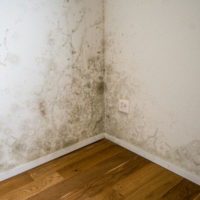 The New York Post reports that the city’s housing authority is way behind in dealing with complaints of toxic mold from tenants. For years the agency has been under siege for its failure to fix leaking buildings and pipes, including a 2013 class action suit by residents. In 2015, a Manhattan federal judge imposed a watchdog to monitor efforts to remedy the continuing mold problems.
What is Toxic Mold?
Mold itself is not toxic, but certain molds are toxigenic, meaning they can produce mycotoxins under the right growing conditions. Toxic mold is used to describe indoor air quality issues that are mold-related. Toxigenic molds have been linked to upper respiratory tract problems, asthma, and allergies. Anyone with reduced immunity may be particularly susceptible to infection from molds.
Mold spores are in both indoor and outdoor environments and will grow wherever there is excessive moisture. Spores grow well on wet cellulose materials, such as paper products like cardboard, ceiling tiles, and wood. Mold can also grow on paint, wallpaper, drywall, materials for insulation, carpet, upholstery, other fabrics, and even dust.
Symptoms of Toxic Mold Exposure
Common symptoms of exposure to toxic mold include:
- Wheezing
- Red and itchy eyes and/or skin
- Congestion
These symptoms can be more harmful to people who have allergies or asthma. Large amounts of mold can induce severe reactions that include fever and shortness of breath.
NYCHA Fails to Fix Mold Problems in City Housing
Newly available data make it clear just how short the city has come in its effort to fix complaints of mold received from tenants in New York City Housing Authority (NYCHA) housing. NYCHA operates 174,000 public housing apartments in 316 developments. During a span of just three months, the NYCHA opened 100,760 work orders in response to complaints about broken pipes and mold, of which only 40,859 were fixed. During this three-month period, 30 percent of the requested repairs were never completed and another 28 percent of work orders were closed or canceled without any work taking place.
In an extreme case last year, an 83-year-old woman was found hallucinating in her public housing apartment by a case worker who had stopped by for a visit. The worker called the police who reported that almost 90 percent of the victim’s apartment was covered in one to two inches of black mold. The woman was taken to the hospital immediately.
Lies About Lead
In addition to continuing problems with toxic mold infestations, the NYCHA has been under fire recently as investigations uncover the extent to which the authority went to hide the presence of lead paint in its apartments. Exposure to lead is extremely dangerous for young children and can cause brain damage. Although city inspectors had conclusive evidence of lead paint in 34 public housing apartments, it appealed the findings instead of relocating the lead-poisoned children to safer surroundings.
Wilmington Toxic Mold Lawyers at Jacobs & Crumplar, P.A. Fight for Those Harmed by Toxic Mold
If you suffered an illness from exposure to toxic mold or another toxic material, the experienced Wilmington toxic mold lawyers at Jacobs & Crumplar, P.A. are here to help. To schedule a free consultation, call us at 302-656-5445 or contact us online. Located in Wilmington and Millsboro, Delaware, we serve clients throughout Dover, New Castle County, and Sussex County.
Blind Spot Truck Accidents
 Driving a passenger car near a huge truck can be intimidating. For obvious reasons, it is a good idea to keep your distance from these monstrous vehicles and steer clear of a truck that is showing signs of structural issues or seems to be under the operation of an unsafe driver. Simply traveling close to a giant truck can put you and your car’s occupants in danger of a blind spot accident.
The physical size of tractor trailers can cause visibility issues for the driver of a nearby vehicle. Although truck drivers are trained to keep track of the traffic around their vehicle, drivers can easily lose track of a car that finds its way into a truck’s blind spot, creating an unsafe situation if the truck driver attempts to turn, change lanes, or stop without noticing that there is a neighboring vehicle out of sight.
What are Blind Spots?
All vehicles have blind spots, or areas that the driver cannot see while driving. Even with a rear-view and side mirrors, some areas surrounding the vehicle are hidden from the driver’s view. In cars and trucks of all sizes, blind spots are a serious concern. It is still important while driving or backing up to account for the possibility that there could be an object, vehicle, or person in your blind spot. In commercial trucks, the blind spots are bigger and the potential for disaster is significantly increased.
Where are a Truck’s Blind Spots?
Tractor trailers have four major blind spot zones:
In front of the cab: The driver is unable to see anything immediately over the front of the truck. It is best to keep a distance of at least 20 feet from the front of a truck.
Behind the trailer: The area directly behind the trailer is completely out of the driver’s view. If you are traveling behind, it is best to leave at least 30 feet between your vehicle and the back end of a tractor trailer.
Below and beside the driver’s window: Much of the lane to the truck driver’s left is difficult to see from their viewpoint. Stay out of that lane, if possible. If you must pass, do so without spending too much time in the area next to the trailer.
Right side of the truck: The two lanes to the right of the truck are visually problematic for the truck driver as well. If you must travel in these lanes, be mindful of the truck driver’s limited range of view.
Wilmington Truck Accident Lawyers at Jacobs & Crumplar, P.A. Fight to Obtain the Compensation You Deserve
If you or someone you love was injured in a truck accident, the Wilmington truck accident lawyers at Jacobs & Crumplar, P.A. can help you obtain compensation. To learn more, contact us online or call us at 302-656-5445 to schedule a free case evaluation. With offices located in Wilmington and Millsboro, Delaware, we serve clients throughout Dover, New Castle County, and Sussex County.
Workers Ill from Silica Dust
 A recent Centers for Disease Control and Prevention (CDC) report highlighted the risks of chronic respiratory illness for individuals working with engineered stone commonly used in residential and commercial buildings. Currently the most widely used material for kitchen and bathroom countertops and vanities, artificial stone in its finished form is not dangerous. Yet, workers who chisel, grind, and polish these materials inhale tiny silica particles that can lead to silicosis, a serious and fatal condition.
Silica Dust Dangers
Silica, or quartz, is a common mineral found in a wide variety of building materials, such as concrete, sand, soil, and granite. When these materials are disturbed by cutting or grinding, tiny crystalline particles become airborne. If these particles are inhaled, they can lead to debilitating and fatal conditions, including:
- Chronic Obstructive Pulmonary Disease (COPD)
- Kidney disease
- Lung cancer
- Silicosis
Silicosis develops within a few weeks to several years after exposure. Silica dust causes fluid and scar tissue to develop in the lungs, making it difficult to breathe. Over time, people with silicosis often need oxygen and other devices to help with breathing. Based on extensive scientific research on the dangers of silica dust exposure, both the World Health Organization and the American Cancer society identified crystalline silica as a known human carcinogen.
Preventing Silica Dust Exposure
In 2016, the Occupational Safety and Health Administration (OSHA) reduced the amount of silica dust permitted in workspaces by half, a move that some industry groups found excessive. Yet, others want more far-reaching safety standards that include specific guidelines for workers who cut and shape engineered stone. Currently, OSHAs’ silica standard for construction requires the following safety practices:
- Engineering controls that include wetting down workstations, vacuums, and other types of exhaust ventilation
- Work practices recommended by tool manufacturers to limit airborne particles, including wetting dust before sweeping it up
- Respirators when work practices and engineering controls are not enough to maintain safe silica levels
If you were harmed by exposure to a toxic chemical or substance, you do have recourse to seek damages for your medical bills and lost wages while you are unable to work. To receive the compensation you deserve for a preventable illness, you must prove exposure to a toxic material occurred and that exposure directly caused your illness. It takes an experienced Wilmington environmental lawyer to make this connection.
Wilmington Environmental Lawyers at Jacobs & Crumplar, P.A. Represent Clients with Health Conditions Caused by Toxic Exposure
If exposure to silica dust, mold, pesticides, or tainted water left you fighting a chronic or life-threatening condition, you may have cause to bring a claim against the person or company who should have protected you. To learn more about your rights and legal options, contact a Wilmington environmental lawyer at Jacobs & Crumplar, P.A. With offices in Wilmington and Millsboro, Delaware, we work with clients throughout the state, including Dover, New Castle County, and Sussex County. Call us at 302-656-5445 or contact us online for a free consultation.
Halloween Slip and Fall Dangers
 Halloween is intended to be one of the most fun nights of the year. Adults and children alike get into the spirit with fun costumes and festivities. Drivers are always told to be extra cautious, but homeowners should also be aware of any surprises as well. Just because it is Halloween and trick-or-treaters are expected at your doorstep, this does not mean that homeowners are entitled to be negligent in keeping up with their property. If a slip and fall accident happens on a walkway or elsewhere on the property of any homeowner on Halloween, the homeowner can be held liable for any injuries or damages.
Homeowners must be especially mindful on Halloween, since the people who are most likely to enter the property are children. Although a homeowner could argue that they did not necessarily invite that specific child onto their property, it is understood that many children are expected to enter the property on that night, or on a town’s designated night for trick or treating.
Homeowner Responsibility
It is of utmost importance to make sure walkways are kept free of debris and other potentially harmful objects that could be an attractive nuisance to children, especially since children could be wearing masks or cumbersome costumes, which impedes their movements. Homeowners should also be aware that trick-or-treaters may opt not to use paved walkways and they could enter the property on grassy areas. If there are dangerous holes or other areas on the property where you do not want people to go, homeowners should rope it off with caution tape or create another type of barrier.
Even if homeowners turn out the porch light to signal that they are not participating in Halloween, walkways should still be cleared of debris and any dangers since children could still come to the front door. Homeowners should be up to date on their property insurance bill and they should ensure that they have enough homeowner’s insurance coverage in case of a slip and fall accident on their property. Although homeowners and landlords are usually liable for any injuries occurring on the property, tenants should check their lease for any clauses, which could give rise to their own liability if a slip and fall accident occurs on the premises.
Parents Can Help Avoid Accidents
To reduce the possibility of slip and fall accidents, parents should ensure that children’s costumes do not obstruct the child’s vision or physical movement in a way that increases the likelihood of an accident. Additionally, trick-or-treaters and their guardians should carry a flashlight in case they encounter a dimly lit area, and parents should encourage children to use walkways and only go to homes where there is adequate lighting on the property.
Dover Slip and Fall Lawyers at Jacobs & Crumplar, P.A. Help Victims of Halloween Slip and Fall Accidents
If you experienced a slip and fall accident on Halloween or any other time of year, the Dover slip and fall lawyers at Jacobs & Crumplar, P.A. can help. We will hold the negligent party liable for your injuries so you can focus on your recovery. Located in Wilmington and Millsboro, Delaware, we serve clients throughout the state, including Dover, New Castle County, and Sussex County. Call us today at 302-656-5445 or contact us online for a free consultation.
Corporations Accused of PFAS Contamination
 Polyfluoroalkyl substances (PFAS) are a collection of fluorinated chemicals used in different types of industrial and consumer products. Regulation of these substances is inconsistent, and PFAS contamination may be even more widespread than we realize. The Environmental Working Group (EWG) released a report alleging that major companies have known about the damaging effects of PFAS chemicals for decades and kept the information to themselves.
The EWG report uses internal documents from 3M and DuPont to create a timeline for their discoveries of the dangers of PFAS chemicals. As early as the 1950s, these documents show that the companies knew of the potential for PFAS to build up in the bloodstream. In the 1980s, they discovered a link between PFAS and cancer, as well as high rates of cancer among their own employees. It was not until 1998, however, that the companies alerted federal and state agencies to the dangers of PFAS, and regulators have been slow to catch up on managing the risk.
PFAS Not Regulated by Government Agencies
The Environmental Protection Agency (EPA) cracked down on two of the most common PFAS contaminants: perfluorooctanoic acid (PFOA) and perfluorooctanesulfonic acid (PFOS), but there are many more chemicals that fall into this category. PFAS have not been classified as hazardous substances, so companies can continue releasing them into the air and water with impunity. An estimated 500 industrial sites across the country are releasing toxic PFAS chemicals, and there are currently no regulations requiring them to stop these activities. Firefighting foams continue to be manufactured with PFAS, which can contaminate water supplies when it runs off.
More than 700 communities in 49 states have documented PFAS contamination issues, and experts believe there may be many more. According to unreleased federal documents, approximately 110 million people in the U.S. have contaminated drinking water, and water utilities are not required to test or treat water for PFAS. Food supplies are also affected by PFAS.
DuPont has faced public criticism over its use of PFAS, particularly when it was revealed that Teflon contained PFAS. Chemours, a subsidiary that took over all their activities involving PFAS, sued DuPont alleging that the corporation did not notify them of the dangers associated with PFAS. DuPont has stopped using PFOA, PFOS, and another PFAS chemical called GenX, and they have pledged to stop using other long-chain PFAS by the end of 2019. They have also committed to support remediation efforts, including sharing their proprietary water treatment technologies.
Delaware Environmental Lawyers at Jacobs & Crumplar, P.A. Fight for the Rights of Toxic Exposure Victims
PFAS contamination can be toxic to internal organs and lead to cancer development. If you have suffered from injury or illness linked to PFAS chemicals, call the Delaware environmental lawyers at Jacobs & Crumplar, P.A. Our legal team has the knowledge and experience to hold those responsible for your suffering accountable for their negligence. With offices conveniently located in Wilmington and Georgetown, Delaware, we help victims of toxic exposure throughout the state, including Dover, New Castle County, and Sussex County. Call us today at 302-656-5445 or contact us online for a free consultation.
9/11 Mesothelioma Deaths on the Rise
 Many people have heard of mesothelioma, a type of cancer associated with exposure to asbestos. In fact, mesothelioma has been linked with numerous occupations, including working as an emergency first responder. First responders regularly encounter burning or falling debris. If the debris contains particles of asbestos, they can be inhaled and lead to the development of mesothelioma years later. According to the latest reports, this has been happening more frequently to some of the first responders who were on the scene when the New York World Trade Center’s twin towers collapsed on September 11, 2001.
Serious Medical Fallout
When 9/11 occurred, officers, firefighters, and other first responders never thought about their own safety. Instead, they rushed into burning and destabilizing buildings in the hopes of helping people avoid injuries and fatalities. During the commotion, the materials that made up the towers began to fall from above, lingering in the air. Even workers who wore masks could not help but breathe in the toxins.
Nearly two decades later, the New York Police Department (NYPD) has released information stating that officers who were onsite at the World Trade Center during 9/11 have died in record numbers. In fact, their deaths have occurred 10 times as fast as would usually be expected. Currently, the number of deaths of NYPD’s finest who were at the towers on 9/11 hovers just below 250.
In addition to NYPD officers, the firefighters who helped on that day have also shown a significant increase in illnesses and deaths. Specifically, firefighters who worked on 9/11 are 19 percent more apt to be diagnosed with mesothelioma, ostensibly because the dust coming from the buildings contained serious amounts of asbestos fibers.
Attention for 9/11 Mesothelioma Deaths
Despite research and evidence linking first responder deaths and illnesses with mesothelioma, some victims and their families feel they are not receiving the compensation they deserve. Though the September 11 Victims Compensation Fund has paid some claims to workers or surviving relatives, many worry the fund will run out of money before everyone diagnosed with mesothelioma has been adequately compensated. However, President Donald J. Trump has signed measures into law to keep the fund solvent until 2092.
Still, plenty of social scientists, politicians, and doctors worry that 9/11 mesothelioma deaths may only be the tip of the iceberg. They suggest that other cancers and conditions, including prostate cancer, could also affect survivors, which might make it tough for a claim to be accepted and paid.
Delaware Mesothelioma Lawyers at Jacobs & Crumplar, P.A. Help 9/11 Victims Diagnosed With Cancer
If you were at the site of the World Trade Center on or after September 11, and you ultimately received a diagnosis of mesothelioma or another type of cancer, a Delaware mesothelioma lawyer at Jacobs & Crumplar, P.A. can help. Call us at 302-656-5445 or contact us online for a free consultation. Located in Wilmington and Millsboro, Delaware, we serve clients throughout Dover, Sussex County, and New Castle County.
Dump Truck Accidents
 Dump trucks represent a heightened risk of injury and death compared to passenger vehicles. A typical dump truck weights several times the average passenger vehicle. In fact, a loaded dump truck can weigh over 65,000 pounds and can create catastrophic consequences when involved in a collision.
Weight is not the only factor that makes dump trucks especially dangerous. Dump trucks are designed to have added ground clearance and a relatively high center of gravity. This makes the trucks much more susceptible to overturning while making turns. The combination of heavy weight and a relatively high center of gravity makes dump trucks inherently harder to stop or maneuver. Considering this, precautions are necessary to maintain safety.
Keeping the Roads Safe
Both individual state and federal laws impose requirements on commercial drivers. When applying for a commercial driver’s licenses, applicants must have a clean driving record and pass medical, written, and practical driving tests. The Motor Carrier Safety Improvement Act of 1999 requires a commercial driver’s license holder to be disqualified from operating a commercial motor vehicle when convicted of major violations, such as driving under the influence of alcohol or drugs. The holder can also be disqualified for serious traffic violations, such as making erratic lane changes or driving recklessly.
Despite efforts to minimize risks posed by dump trucks, serious accidents often happen. Some of the more common causes include negligent acts by the driver, such as:
- Failing to yield when leaving a construction work zone or driving recklessly
- Inadequately securing loads
- Neglecting safety procedures
Sometimes, the hazard is created by the truck owner, such as if a truck is not properly maintained. Failure to properly maintain the brakes, steering, and tire traction and pressure is especially risky and invites serious accidents to take place. Unfortunately, according to the Federal Motor Carrier Safety Administration, serious dump truck accidents are on the rise. In 2016, 8,206 dump trucks needed to be towed from an accident. This was an increase of nearly 10 percent from the year prior. In that same year, 5,483 accidents involving injuries were recorded, representing an increase of 2.7 percent from the year prior.
Representing Victims of Dump Truck Accidents
Victims of dump truck accidents may need to file a personal injury lawsuit to receive full compensation for medical expenses, lost wages, pain and suffering, and other crash-related damages. If a victim is killed in a dump truck accident, the surviving family will need to file a wrongful death claim to be compensated for their losses.
Wilmington Truck Accident Lawyers at Jacobs & Crumplar, P.A. Advocate for Victims of Dump Truck Accidents
If you were seriously injured in a dump truck accident, contact an experienced Wilmington truck accident lawyer at Jacobs & Crumplar, P.A. Call us at 302-656-5445 or complete an online form for a free consultation. Located in Wilmington and Georgetown, Delaware, we serve clients throughout the state, including Dover, New Castle County, and Sussex County.
Drowsy Driving Truck Accidents
 Proposed changes to the hours-of-service (HOS) rules would give truck drivers more flexibility in their workday. The Federal Motor Carrier Safety Administration (FMCSA) has proposed revisions to the HOS rules, all of which are geared toward allowing truck drivers to better manage the challenges of driving long distances. The FMCSA administrator hopes that, if implemented, these changes help reduce the number of drowsy driving truck accidents that occur each year.
Consequences of Drowsy Driving
Inadequate sleep can cause drivers to be less attentive, react slower, and make poor decisions. Drowsy driving is an increasingly dangerous problem in the U.S.; the National Highway Traffic Safety Administration (NHTSA) estimates that it causes up to 100,000 accidents per year.
Commercial truck drivers are at risk for this type of accident due to the nature of their jobs. Truck drivers are often required to drive for many hours across long stretches of highway to meet tight deadlines. Without adequate sleep, these demanding schedules take an even greater toll on drivers. Also, many truck drivers have undiagnosed sleep disorders, such as sleep apnea, which can lead to daytime fatigue and falling asleep at the wheel.
Driving drowsy is in many ways similar to drunk driving. Drivers who do not obtain adequate sleep may experience impaired judgment, dulled senses, and delayed reaction times. The Centers for Disease Control and Prevention (CDC) recommends that adults get at least seven hours of sleep per night to prevent drowsy driving.
Proposed Changes to the HOS Rules
Currently, truck drivers hauling property are subject to several HOS rules. The FMCSA’s proposal would:
- Require drivers to take a break of at least 30 minutes when they drive for eight hours without interruption
- Permit drivers to split their required 10 hours off-duty into two periods; one for at least seven consecutive hours in the sleeper berth and the other for at least two consecutive hours either in the sleeper berth or off-duty
- Allow one break between 30 minutes and three hours to pause the 14-hour driving limit so long as the worker takes 10 consecutive off-duty hours at the end of their shift
- Extend the permitted driving window for the adverse driving exception to two hours
- Lengthen short-haul drivers’ maximum on-duty period from 12 to 14 hours and extend their distance limit from 100 to 150 air miles
Wilmington Truck Accident Lawyers at Jacobs & Crumplar, P.A. Represent Victims Injured in Drowsy Driving Accidents
If you were injured in a drowsy driving accident, contact a Wilmington truck accident lawyer at Jacobs & Crumplar, P.A. We can help you obtain the maximum compensation to which you are entitled. Our experienced attorneys represent clients in Dover, New Castle County, and Sussex County from our offices conveniently located in Wilmington and Georgetown, Delaware. For a free consultation, please complete our online contact form or call us at 302-656-5445.
New Lymph Node Staging May Prevent Surgery
 A new, minimally-invasive testing procedure used to determine lymph node staging in pleural mesothelioma is helping patients avoid unnecessary surgery in advanced cases of the disease. The endobronchial ultrasound-guided transbronchial needle aspiration (EBUS-TBNA) procedure allows doctors to examine the mediastinal lymph nodes deep in the chest wall to determine the presence of advanced pleural mesothelioma.
By removing tissue from these lymph nodes, doctors can stage the progression of pleural mesothelioma to determine if surgery would be beneficial to the management of the disease. In cases where the lymph nodes show advanced progression of the disease, surgery would not benefit the patient. Avoiding this unnecessary surgery can increase the quality of life for the patient.
Plueral Mesothelioma
Plueral mesothelioma is a terminal cancer that is directly related to exposure of asbestos fibers. When airborne asbestos fibers are inhaled, the toxic fibers become deeply imbedded in lung tissue and the pleural lining of the chest cavity. These fibers can lay dormant for a period of 20 to 40 years before victims develop the disease.
This type of cancer is usually terminal with an average lifespan of 16 to 21 months post-diagnosis. Surgery has been shown to be effective at prolonging the life span of those in the early stages of the disease, but least effective to those in advanced stages. The risks of surgery to those with advanced pleural mesothelioma can shorten the life span of some patients. The EBUS-TBNA procedure allows doctors to determine if surgery is a benefit for the patient. For those with advanced stages of the disease, avoiding unnecessary surgery can help preserve the quality of life the patient experiences.
How Does EBUS-TBNA Work?
The EBUS-TBNA procedure is an out-patient minimally invasive procedure that allows doctors to access lymph nodes deep inside the chest wall. A long, fiber optic tube is inserted into the mouth, down the trachea, and into the bronchi in the lungs. Using ultrasound technology and a specialized aspiration needle, the doctor can view the inside of the lungs, airways, and lymph nodes, and remove a small piece of the lymph nodes for staging. Pathology can then examine the tissue and determine if the cancer has spread to surrounding areas, and to what degree the cancer has progressed within the lungs. Lymph nodes found between Stage Three and Four are not recommended for surgical intervention.
The traditional method for staging pleural mesothelioma lymph nodes involved making an incision in the neck and inserting a scope through the incision to access the lungs and surrounding lymph nodes. The EBUS-TBNA procedure requires no incision and allows doctors to access areas deep within the lung tissue and surrounding areas. Initial diagnosis of pleural mesothelioma can be difficult with just x-rays, CT scans, and blood work. The disease can only be truly diagnosed and staged using a tissue biopsy. The new, minimally invasive EBUS-TBNA procedure provides patients with accurate results and effective treatment options.
Delaware Mesothelimoa Lawyers at Jacobs & Crumplar, P.A. Help Victims of Mesothelioma Claim Compensation
If you or someone you love has been diagnosed with mesothelioma, contact the Delaware mesothelioma lawyers at Jacobs & Crumplar, P.A. today. Call us at 302-656-5445 or contact us online to schedule a free consultation. Our Wilmington and Georgetown, Delaware offices serve clients throughout Dover, New Castle County, and Sussex County.
What are Truck Underride Accidents?
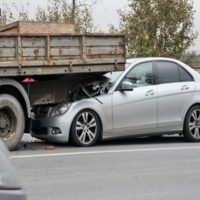 In truck underride accidents, a smaller car becomes lodged underneath the back or side of a tractor trailer. As opposed to an override accident, which occurs when a truck drives over a car, an underride incident involves the back or side of the truck. Sometimes, the motorist drives under the back or side of the truck. In other cases, a huge commercial truck backs up over a car or turns unexpectedly into the path of a car, causing the car to end up underneath the side of the tractor trailer. Truck underride accidents come in many forms. These accidents occur when a driver rides up under the back of a truck that has stopped or decelerated suddenly.
Usually, these truck accidents inflict serious damage to the smaller vehicle and harm its occupants. The size and power of these giant trucks can crush the top of a car. The car roof can be sliced off and extensive damage to the passenger cabin can cause severe injuries or fatalities. In fact, truck underride accidents are some of the most gruesome and catastrophic road incidents in the trucking industry. They almost always involve severe injuries and are often fatal.
Prevention and Protection
Underride guards are now mandatory for all commercial trucks of a certain size. These metal rails extend from the back of the truck toward the ground to obstruct the gap under the truck’s carriage and the road. Unfortunately, this safety feature has some limitations. Sometimes, the guards are installed with enough room for a smaller vehicle to fit underneath, leaving them unprotected. The rear-end barrier does nothing to prevent side-impact underrides.
Even when the guards are in place, they may not be properly visible due to reflective stickers that have peeled off or are covered in dirt and debris that obscures their shiny surface. To avoid back-end overrides, break lights on the trailer should be working properly as well.
Liability and the Law
If the truck involved was improperly built or inadequately maintained to avoid this type of accident, car occupants who were injured in an underride accident have a case to make against the truck’s manufacturer or the trucking company. If the driver was negligent, there may be cause to bring a suit against them or their employer. A driver may be found negligent if they were driving impaired or fatigued. Any unsafe driving that contributed to the accident may be held against them as well.
Wilmington Truck Accident Lawyers at Jacobs & Crumplar, P.A. Help Victims Injured in Truck Underride Accidents
Drivers and passengers who were hurt in underride accidents may be eligible to collect damages for their injuries. We can help build your case against a negligent driver or trucking company. Call a Wilmington truck accident lawyer at Jacobs & Crumplar, P.A. today at 302-656-5445 or contact us online to set up a free consultation today. With offices in Wilmington and Georgetown, Delaware, we represent clients in Dover, New Castle County, and Sussex County.