



Living Near a Hazard
 Sometimes, our neighbors can be pleasant or they can be more challenging. This is the case for residents of Grays Ferry, a neighborhood located near the gas refinery complex owned by Philadelphia Energy Solutions (PES). The refinery has been at this Philadelphia location for 150 years. The complex has since been surrounded by residential housing and the proximity has not been easy for those residents. They say that the refinery regularly spews out odors that smell like rotten eggs. In the summer, it is unpleasant to be outside due to the stench. Odors are not the only concern; residents have experienced respiratory problems, such as recurring asthma that they attribute to the refinery. Some wonder if they are experiencing toxic exposure.
EPA Regulates Refinery Emissions
Over the years, the refinery has been found to be uncompliant with the Clean Air Act. It requires pollutant levels emitted from businesses to be kept at safe levels. The Environmental Protection Agency (EPA) has set national emission standards for hazardous air pollutants for petroleum refineries. The regulatory scheme varies the standards based on the age of refineries. Standards are more stringent for newer sources. Refinery industries seem to be keeping obsolete refineries on-line for as long as possible to avoid more stringent standards.
Advocacy Organization Opposes Refinery
Over the years, there have also been numerous fires at the complex. Community organizers have formed an advocacy group called Philly Thrive to seek action from regulators. The group has advocated for the refinery to either be shut down completely or until it complies with the Clean Air Act. Some community members have feared that the only way action will happen is if a catastrophic disaster occurs at the refinery.
Concerns for safety and health increased recently when fires again erupted at PES. An explosion at the Girard Point refinery at the PES complex caused multiple fires to break out and shook the walls of nearby homes. The city ordered residents to shelter-in-place while firefighters worked to control the blaze. The blaze grew to a three alarm fire with personnel and pieces of equipment being deployed by local fire companies. Combined efforts by on-site and local firefighters enabled the fires to be contained within a few hours. Thankfully, only four people on-site were injured.
Today, industries and residential communities are often located close together. This requires careful design with safety and health of both workers and residents in mind. The urge to maximize profits must be tempered by a responsibility to be a good neighbor and keep local residents free from exposure to hazardous materials.
Delaware Environmental Lawyers at Jacobs & Crumplar, P.A. Advocate for the Safety of Those Residing Near Hazards
If you live near a hazard, you may have options to recover damages. If you are experiencing exposure to dangerous levels of air or water contaminants, a Delaware environmental lawyer at Jacobs & Crumplar, P.A. can help. Call us today at 302-656-5445 or complete an online form for a free consultation. Located in Wilmington and Georgetown, Delaware, we serve clients throughout the state, including Dover, New Castle County, and Sussex County.
Mesothelioma Breath Test
 Mesothelioma is a type of lung cancer that is caused by exposure to toxic asbestos fibers that become deeply imbedded in lung tissue where they lay dormant for 20 to 40 years. Mesothelioma typically claims the lives of its victims in less than two years post-diagnosis, but a new diagnostic breath test that measures mesothelioma biomarkers may offer new hope for prolonging the lives of those with the disease.
New Study Aims to Develop Early Detection Technology
Researchers from the United Kingdom’s Owlstone Medical Corporation and the International Association of Heat and Frost Insulators and Allied Workers Union have joined forces in a three-year study that aims to develop a biomarker breath test for the early detection of mesothelioma. Owlstone Medical has already invented the Breath Biopsy apparatus, which researchers hope will allow them to extract organic and chemical compounds on a person’s breath that could lead to a diagnosis of mesothelioma.
New technology and biomarker indicators can potentially lead to identifying people who are at-risk for developing the disease in later years. Occupational exposure to asbestos fibers leads to 3,000 new cases of mesothelioma each year. Unfortunately, the current diagnostic procedure is only effective in diagnosing a late-stage disease that has very limited treatment options.
Research has shown that early diagnosis of mesothelioma initiates treatment that can significantly prolong the lifespan for those diagnosed with this cancer. The United States has been slow to develop tools for early detection of the disease. Current diagnosis requires a combination of X-rays, CAT scans, PET scans, blood tests, and tissue biopsies, but still does not pick up the presence of the disease until it is in the advanced stages. Mortality rates decrease significantly with each advancing stage of the illness.
Occupational Exposure
Occupational exposure to toxic asbestos fibers is the leading cause of mesothelioma. Construction workers, auto mechanics, railroad workers, pipe fitters, steam fitters, and miners carry the highest risk for developing the disease. Despite new regulations and removal of asbestos-based products, this malignant cancer is expected to keep claiming victims for decades because of its long dormancy period.
While those that work in asbestos-related industries have the highest risk of developing mesothelioma, second-hand exposure has proven to be equally toxic. Family members of asbestos workers inhaled the toxic fibers from the clothing and hair of their loved ones returning home from work each day. Many people were also exposed to fibers when old buildings containing asbestos were knocked down or became damaged, which sent the toxic fibers into the air and onto the grounds surrounding the buildings.
With the future of new cases of mesothelioma on the horizon, the potential for early detection that the new breath test offers hope to those most vulnerable to developing the disease. With early detection and treatment, victims can possibly extend their quality of life and life span for years to come.
Delaware Mesothelioma Lawyers at Jacobs & Crumplar, P.A. Advocate for Victims of Mesothelioma
If you or someone you love has been diagnosed with mesothelioma, contact the Delaware mesothelioma lawyers at Jacobs & Crumplar, P.A. Call us today at 302-656-5445 or contact us online to schedule a free consultation today. Our Wilmington and Georgetown, Delaware offices serve clients throughout Dover, New Castle County, and Sussex County.
Delayed Approval for Hours of Service Regulations
 Accidents involving commercial tractor trailers have become much too common on the country’s highways. With driver fatigue among the main causes of commercial truck accidents, the federal government has instituted regulations limiting the number of service hours a commercial truck driver can operate their vehicle without taking a mandatory rest break. New proposed regulations aim to give commercial truck drivers more flexibility in adhering to the hours of service rules.
Proposed Federal Regulations
To make it easier for commercial truck drivers to adhere to the rules, the Federal Motor Carrier Safety Administration (FMCSA) has drafted new hours of service regulations. Under the new rules, commercial truck drivers would be subject to extended limits for continuous driving hours permitted and the number of hours they can operate under adverse driving conditions. The current 100 air mile short haul exemption was expanded to 14 hours on-duty and the current 30-minute mandatory break for truck drivers after driving for eight continuous hours has been revised. Other changes to regulations involve splitting up rest breaks for drivers of trucks with sleeping berths.
Public Comment Period
A public comment period prior to the implementation of the proposed regulations allows citizens, safety advocacy organizations, and industry stake holder groups, such as the Owner-Operator Independent Drivers Association or TruckerNation.org to express their concerns about the new rules. During the public comment period, the FMCSA also will hold several public listening sessions.
Continued Delay
Supporters of the proposed legislation worry the new hours of service regulations will not go into effect any time soon. The original time frame allowing for public comment on the proposed rules has been delayed as the pending review of public comments continue. Safety experts warn the number of truck collision fatalities will continue to rise until more effective hours of service regulations become law.
Compensation for Truck Accident Injuries
Fatalities involving drivers, passengers, and pedestrians frequently result from truck collisions. Truck accidents can result in serious and life-changing physical injuries. Individuals involved in collisions with trucks often suffer broken bones, loss of limbs, concussions, traumatic brain injuries, internal bleeding, organ damage, back injuries, paralysis, and other medical complications that require years of medical treatment. Medical expenses, including the cost of hospital stays, prescription drugs, physical therapy, occupational therapy, and ongoing medical testing can be a financial nightmare.
By filing a civil lawsuit against those responsible for the trucking accident, injured individuals can obtain compensation for these medical costs, the cost of the physical damage to their vehicle, and damages for their pain and suffering. Contacting an experienced Wilmington truck accident lawyer is the first step in moving forward after a truck accident.
Wilmington Truck Accident Lawyers at Jacobs & Crumplar, P.A. Assist Truck Accident Victims
If you or a loved one has suffered serious injuries in a collision with a truck, the experienced Wilmington truck accident lawyers at Jacobs & Crumplar, P.A. can help you obtain compensation for your injuries. Located in Wilmington and Georgetown, Delaware, we represent truck accident victims throughout the state, including those in Dover, New Castle County, and Sussex County. To schedule a free initial consultation today, call us at 302-656-5445 or submit an online inquiry form.
Truck Accidents with Hazardous Materials
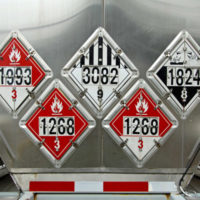 Truck accidents can cause serious damage and injury. Accidents involving trucks that contain hazardous materials can be catastrophic. Any truck barreling down a highway can be intimidating for nearby drivers. The vehicle’s size is enough to make a neighboring driver uneasy. Considering these threats to safety, how often do we consider the dangers hidden inside the huge trailers being hauled along our local roadways?
Trucks are used to transport goods for various industries. It may be surprising to realize how often the materials transported for these purposes are toxic, flammable, or corrosive substances that have the potential to turn our roads into danger zones. An accident seems more conceivable when it involves driver errors or vehicle malfunctions. It is less foreseeable that a leak from a tanker of hazardous material will set off an uncontrollable fire or fill the air with toxic fumes.
Regulations
The trucking regulations in place for companies and drivers are stringent and in-line with the potential dangers involved in operating these vehicles. Likewise, the added level of danger inherent in handling and transporting hazardous materials calls for additional safety training and certification.
Regardless of the load being carried, all truckers are required to follow normal driving laws, such as following the posted speed limits and avoiding risky behaviors, such as distracted or intoxicated driving, but they are also subject to rules regarding their personal conduct, such as obtaining enough rest to avoid sleepiness behind the wheel.
Drivers and other trucking professionals who deal with these harmful substances are required to adhere to protocols and procedures that are intended to address these added dangers. The crews that pack up the shipment are supposed to mark the load with a placard that signifies that the contents are dangerous. The notice should indicate what kind of material is present and what dangers are posed as a result.
Who is At-Fault?
It takes many people to get a truck’s shipment to its destination. All of them are responsible for making safety a major priority for the trip. If there is a breakdown in the system, the results can be tragic. A shipper should make sure to load the cargo safely in a container appropriate for the materials. The placard and other warnings should be affixed to the truck to advise caution.
Truck manufacturer and maintenance crews should be sure the truck is fit for the road. The trucking company is responsible for planning the trip using a truck appropriate for the size and weight of the load. Finally, the driver must operate the vehicle with care. If any element of the safety plan goes unchecked, an accident may result. Victims may find it difficult to determine where things went wrong and who is responsible for their injuries. A lawyer familiar with the rules and practices of the trucking industry can help.
Wilmington Truck Accident Lawyers at Jacobs & Crumplar, P.A. Represent Victims Harmed by Trucks Transporting Hazardous Materials
If you were injured in an accident with a truck transporting hazardous materials, you need the Wilmington truck accident lawyers at Jacobs & Crumplar, P.A. to prove your case and obtain the compensation you deserve. Call us at 302-656-5445 or contact us online to set up a free consultation. With offices in Wilmington and Georgetown, Delaware, we serve clients in Dover, New Castle County, and Sussex County.
California Couple Awarded $2 Billion in Roundup Cancer Case
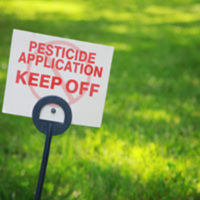 An elderly married couple who became ill after working on their Northern California family farm have been awarded more than $2 billion after proving to an Oakland, California jury that the a chemical in Monsanto’s weed-killer, Roundup, is responsible for their cancer. A Livermore, California farmer was diagnosed with non-Hodgkin’s lymphoma. Soon after, his wife was diagnosed with the same cancer four years later. The couple had used the Roundup herbicide, which contains glyphosate, for 30 years.
Produced by chemical company Monsanto, which was acquired by drug-maker Bayer in 2018, Roundup is sold throughout the U.S. Millions of homeowners continue to use this readily available glyphosate-based product for lawn and garden maintenance on their properties. Alarmingly, glyphosate was declared a probable carcinogen in 2015 by the World Health Organization’s International Research Agency for Cancer.
Two recent lawsuits in San Francisco resulted in sizable settlements in similar cases against Monsanto. In March 2019, the jury in a separate case awarded $80 million to a man who claimed that 26 years of using Roundup resulted in his cancer. There are thousands of cases filed against the makers of Monsanto, in which the plaintiffs allege that they developed cancer as a result of using the weed-killer.
A Research Dispute
The United States Environmental Protection Agency (EPA) determined that glyphosate does not cause cancer. However, some of their research has been called into question. In fact, their motives have been called suspect, as the plaintiffs’ lawyers claimed that the company used powerful connections to influence the findings released regarding the research on glyphosate. In addition to questioning the rationale behind the EPA’s safety claims, the plaintiffs’ lawyers presented internal emails of Monsanto employees attempting to entice reputable researchers to sign on to studies to assert that glyphosate is safe.
Dover Toxic Tort Lawyers at Jacobs & Crumplar, P.A. Represent Clients Injured by Harmful Chemicals
If you developed a preventable illness, such as cancer, as a result of exposure to a dangerous substance in household pesticides or other commonly available chemical products, you may be entitled to compensation for the harm inflicted upon you. The Dover toxic tort lawyers at Jacobs & Crumplar, P.A. will fight for you against the chemical companies responsible for your illness. Call us today at 302-656-5445 or contact us online to arrange a free consultation. Located in Wilmington and Georgetown, Delaware, we represent clients in Dover, New Castle County, and Sussex County.
Risk Evaluation for 40 Chemicals
 The Environmental Protection Agency (EPA) has initiated the first step in a new chemical evaluation prioritization process mandated by the Toxic Substances Control Act (TSCA). The TSCA now requires the EPA to identify 40 chemicals that will undergo a prioritization process to determine which substances require further evaluation and analysis of their safety risks.
Prioritization Process
The first step in the TSCA evaluation process took place when the EPA published a list of 40 chemicals in the Federal Register, which began a mandatory nine to 12-month evaluation for prioritization, and a 90-day period for public comment on the individual chemicals listed. Upon the completion of the 90-day public comment period, the 40 chemicals listed in the Federal Register will be designated as high or low priority. Chemicals deemed high priority will then go through a safety and risk analysis. Those deemed to be low priority will not be subjected to the second level analysis process. Chemicals that are initially designated as low priority can be moved to a high priority status later.
What Chemicals are Being Evaluated for Prioritization?
The TSCA has a current list of 40,000 chemicals, which include those substances that have one or more of the following criteria:
- Persistence and bioaccumulation scores of three or more
- Those with a known cancer risk to humans
- Chemicals with acute or chronic high toxicity levels
The 40 chemicals published in the Federal Register that are awaiting public comment and run the most risk of being deemed a high priority include:
- Seven chlorinated solvents
- Six phthalates, which are known to cause disruption to the normal hormonal balance in humans and are linked to other health complications
- Four flame retardant chemicals
- Formaldehyde
- One chemical used as a fragrance enhancer
- One polymer precursor
Prioritization levels will be determined after the 90-day period for public comment has expired.
What Happens After Prioritization?
For every chemical prioritized, the EPA is mandated to add another chemical to the prioritization process. This system will ensure that the process of evaluating chemicals for safety and public health risks continues and includes a thorough analysis of all possible safety risks. A spokesperson for the EPA released a statement that confirms the agency’s commitment to chemical safety and transparency to the public. The Frank R. Lautenberg Chemical Safety for the 21st Century Act requires the EPA to conduct investigations into the safety and public health risks for chemicals used in manufacturing and processing, as defined by the TSCA.
Georgetown Chemical Exposure Lawyers at Jacobs & Crumplar, P.A. Represent Victims Exposed to Toxic Chemicals
If you or someone you know was injured by exposure to a toxic chemical or environmental material, you may be entitled to compensation. Call the Georgetown chemical exposure lawyers at Jacobs & Crumplar, P.A. at 302-656-5445, or contact us online to schedule a free consultation today. Our Wilmington and Georgetown, Delaware offices serve clients throughout Dover, New Castle County, and Sussex County.
New Type of Radiotherapy May Extend Survival Rates
 For individuals living with mesothelioma, a disease developed after exposure to asbestos fibers, available treatments are often too little, too late. That may change according to a recent study on a new form of radiotherapy treatment conducted at the National Cancer Institute in Aviano, Italy. Recent research conducted at the University Hospital of Udine suggests the use of a specific type of radiotherapy could double a mesothelioma patient’s chances of surviving two or more years.
For many individuals suffering with an asbestos-related disease, including mesothelioma, the disease’s symptoms can take decades to become apparent. By the time the illness is properly diagnosed, the treatment options are limited. Most patients are unable to reverse the disease damage at that point. Patients often undergo surgery, including a resection of the cancer, as well as chemotherapy. Even with treatment, the survival rates for mesothelioma patients have been very low.
Study Findings
All patients in the study initially had some form of surgery but not a complete resection of the cancer. Research patients underwent chemotherapy, as well as the new radiotherapy treatment. While half of the study participants received the typical palliative radiation treatments available at most cancer treatment centers, the other half received the aggressive radiotherapy protocol.
During the study, 108 mesothelioma patients received 25 aggressive hemi-thoracic radiotherapy treatments between 2014 and 2018. The radiotherapy targeted the side of the body where most of the mesothelioma tumors were located. The research revealed almost 60 percent of the patients receiving the new treatment had a survival rate of two years or more. This survival rate was significantly greater than the group receiving only palliative radiation treatment. For patients that only received the traditional palliative treatments, the survival rate was approximately 28 percent.
The research team hopes the more aggressive radiotherapy treatment protocol becomes the new standard of care worldwide for mesothelioma patients. Other researchers caution patients about the side effects of using radiation in combination with chemotherapy.
Compensation for Mesothelioma Patients
Mesothelioma is only one type of medical condition that can result from exposure to asbestos fibers. Exposure to this toxic material may also lead to asbestosis, lung cancer, colon cancer, larynx cancer, and kidney cancer. Living with mesothelioma or another asbestos-related medical condition can place a financial strain on families.
Medical treatment costs, including expenses related to doctor visits, medications, therapy sessions, and lab work can be overwhelming. By filing a civil lawsuit against those parties responsible for their asbestos exposure, including the manufacturers and distributors of materials containing the dangerous carcinogen, mesothelioma patients can obtain the compensation they are entitled. Successful asbestos lawsuits can result in monetary awards for medical costs, lost wages, and pain and suffering.
Georgetown Mesothelioma Lawyers at Jacobs & Crumplar, P.A. Assist Asbestos Exposure Victims
If you or a loved one developed a medical condition, such as mesothelioma or lung cancer, after being exposed to asbestos, the Georgetown mesothelioma lawyers at Jacobs & Crumplar, P.A. are here to help. With offices conveniently located in Wilmington and Georgetown, Delaware, we proudly serve clients in Dover, New Castle County, and Sussex County. To schedule a free consultation today, call us at 302-656-5445 or contact us online.
100 Deadliest Days of Summer
 From Memorial Day until Labor Day, the number of traffic accidents and fatalities involving teenagers increases. The AAA Foundation for Traffic Safety reports that an average of 10 people per day are fatally injured during this time period, which is a 14 percent increase compared to the rest of the year. This period is also known as the 100 deadliest days of summer due to the increase in fatalities.
More teens are on the road during the 100 deadliest days of summer due to summer vacation. Teenagers are more likely to engage in joy riding and driving to social events during the summer. However, teens are also more prone to distractions and are unable to control the vehicle due to their inexperience. During the summer, teens are accompanied by other teens as opposed to adults, causing an increase in distractions.
Before summer break begins, parents should discuss safe driving methods with their teen. It is important to emphasize maintaining speed limits and limiting distractions. Other points to include are:
- Nighttime driving: The AAA Foundation for Traffic Safety found that teen fatalities occur most often between 9:00 p.m. and 5:00 a.m.
- Maintaining speed limits: The AAA Foundation for Traffic Safety also found that 29 percent of motor vehicle deaths involving teen drivers was related to high speeds.
- Distracted driving: The majority of teen crashes involve distracted driving. Fifteen percent of accidents involving teens were due to distractions caused by other teenagers in the car. Teens are also increasingly distracted by their mobile devices, with approximately 12 percent of teen crashes involving cell phone usage.
What Parents Can Do
AAA suggests parents establish and enforce driving rules. Parents should insist that their teens check-in with them before driving and know where their teen is going to be at all times. Keeping open lines of communication is a good way to garner trust and cooperation from teens. Parents should also consistently enforce the driving rules and take away the teen’s driving privileges if they are violated. Though parents can set expectations, enforce rules, and be more vigilant, accidents can still happen when a teenager is behind the wheel.
Delaware Car Accident Lawyers at Jacobs & Crumplar, P.A. Advocate for Victims of All Types of Car Accidents
If you or a loved one was involved in a car accident, do not hesitate to contact the Delaware car accident lawyers at Jacobs & Crumplar, P.A. Call our office at 302-656-5445 or contact us online to set up a free consultation today. With offices in Georgetown and Wilmington, Delaware, we serve clients throughout New Castle County, Sussex County, and Dover.
Near Miss Explosion at Refinery Raises Concern
 Fuel refineries use a series of chemical reactions to arrive at the final product. Hydrogen fluoride is used in the oil refining process and causes a reaction, called alkylation, to make fuel from unrefined oil. Hydrogen fluoride gas readily reacts with water to form highly corrosive hydrofluoric acid. Two workers were seriously hurt when an explosion recently occurred at an ExxonMobil refinery in Torrance, California. The incident was a near miss for a toxic hydrofluoric acid release.
Hydrofluoric acid, when vaporized, will form droplets in a low-level cloud that can travel along the ground for several miles. The effects of exposure are serious; it can burn the lungs and penetrate the skin to damage bones. A hydrofluoric acid release can also cause extensive property damage. Due to the potential catastrophic impact on workers, first responders, the environment, and residents in surrounding areas, all serious chemical accidents are investigated by the U.S. Chemical Safety Board (CSB). Its purpose is to evaluate each chemical release incident in the U.S. to find its root cause.
CSB Investigation of Explosion
Although hampered by resistance from ExxonMobil leadership, the CSB investigators were able to deduce that the accident happened during a non-routine procedure. When problems with an expander device rose, the fluid catalytic cracking unit was put on idle. Steam was then pumped into the reactor to prevent backflow of hydrocarbons into a distillation column.
Ultimately, hydrocarbons leaked into the distillation column from other equipment and reached the reactor connected to an electrostatic precipitator (ESP) device. The ESP caused sparks and ignited hydrocarbons, resulting in an explosion, which released a dust cloud extending for miles and projected large debris around the site.
Near Miss Accidents Warn of Potentially Serious Problems
Near miss accidents need to be taken seriously. Investigators found that debris landed on scaffolding around the alkylation unit and narrowly missed the tank holding thousands of pounds of hydrofluoric acid. If ruptured, the tank would have released a hydrofluoric acid cloud.
An analysis of the failure found that ExxonMobil did not adequately evaluate process hazards. Safeguards were not implemented despite the known threat of ignitable combustibles reaching the device. In addition, safety precautions at the site that required a written variance before deviating from normal operating conditions were deficient. The variance document used to address the non-routine procedure was outdated. It did not reflect changes in use of the expander that happened after the variance document was developed.
OSHA Citations Issued for Violations
In addition to the CSB, Occupational Safety and Health Administration (OSHA) investigators were on the scene to evaluate workplace hazards. They found violations of OSHA’s standard for managing processes using highly hazardous chemicals. The standard requires a system of Process Safety Management to proactively identify, evaluate, and mitigate or prevent conditions in processing equipment that can result in chemical releases from failures in the process, procedure, or equipment.
Georgetown Chemical Exposure Lawyers at Jacobs & Crumplar, P.A. Advocate for Victims of Toxic Exposure
If you were exposed to toxic chemicals in the workplace, the Georgetown chemical exposure lawyers at Jacobs & Crumplar, P.A. can help. We will review your case and help you obtain the justice you deserve. Call us today at 302-656-5445 or complete an online form for a free consultation. Located in Wilmington and Georgetown, Delaware, we serve clients throughout Dover, New Castle County, and Sussex County.
Firefighter Safety Stand Down Week
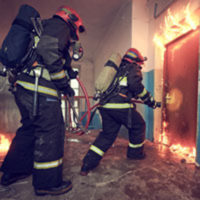 Cancer diagnosis rates among firefighters has become a disturbing trend. A multi-year study by the National Institute for Occupational Safety and Health (NIOSH) recently found that firefighters have a 14 percent greater risk of dying from cancer and double the chance of having testicular cancer or mesothelioma, compared to the general public.
The International Association of Fire Chiefs and the National Volunteer Fire Council have come together to present Firefighter Safety Stand Down week on June 16 to 22. Both organizations recently issued the Lavender Ribbon Report, which provides a series of best practices that, if followed, are expected to reduce risk of cancer among firefighters.
The danger of exposure to cancer-causing materials comes from both the building materials and the gear worn to fight the fires. Exposure to contaminants in the air from combustion products is well known. Recently, firefighting gear and foam have been recognized as potential likely sources of exposure to carcinogens. Turn out pants are typically made using perfluorooctanoic acid (PFOA), as it has useful water repellent properties. PFOA and similar compounds have been implicated as carcinogenic. There is no known safe alternative for making turnout gear at a reasonable cost.
The Lavender Ribbon Report
Helpful tips for firefighters in the Lavender Ribbon Report include the following:
Using Personal Protective Equipment (PPE):
- Use full gear for all responses to minimize the chance of exposure to airborne carcinogens.
- Use a second sock hood to ensure smoke protection of the face, jaw, and neck area that is exposed when using a self-contained breathing apparatus (SCBA), and to always have a hood free of contamination available while the other is drying after decontamination.
Decontaminating PPE and Related Gear:
- Begin gross decontamination at the work site immediately by using soapy water and a brush while continuing to wear a SCBA.
- Place contaminated or soapy PPE in an exterior compartment or large storage tote to prevent exposure from off-gassing while in transit.
- Clean SCBA gear and other contaminated equipment before loading it onto the apparatus cab.
- Perform thorough decontamination of all equipment and PPE at the station.
Personal Hygiene Practices:
- Use personal wipes to clean the head, neck, face, and hands as soon as possible after the response.
- Refrain from eating or drinking until after gross decontamination and only eat in areas away from contaminated equipment.
- Shower at the station within one hour of completing response.
- Segregate storage spaces for gear away from the kitchen and sleeping areas of the station.
Lifestyle Precautions:
- Conduct an annual physical to detect potential diseases early
- Do not use any form of tobacco
- Exercise regularly and maintain a normal weight
- Track and record occupational exposure at fire incidents
Firefighters and other first responders are urged to pause their non-emergency activities during Firefighter Safety Stand Down week and educate themselves on reducing cancer risks through implementing best practices. The Firefighter Cancer Registry Act has been established to help develop data on firefighters’ risk of cancer. First responders are encouraged to report exposure information to the national registry.
Wilmington Workers’ Compensation Lawyers at Jacobs & Crumplar, P.A. Represent Injured First Responders
If you are a first responder that was injured at work, you may be entitled to Workers’ Compensation benefits to help with medical costs. We will help secure the maximum compensation you are entitled. Call us today at 302-656-5445 or complete an online form to speak to an experienced Wilmington Workers’ Compensation lawyer and Jacobs & Crumplar, P.A. Located in Wilmington and Georgetown, Delaware, we serve clients throughout Dover, New Castle County, and Sussex County.