



Household Chemicals Linked to Childhood Speech Delays
 A recent study published in the Journal of the American Medical Association (JAMA) Pediatrics shows a troubling connection between prenatal exposure to common household chemicals and childhood language delays. Around 10 percent of children born to women exposed to chemicals, called phthalates, displayed language delays in their children between the ages of 30 and 37 months.
Delays constituted using 50 words or less. Children displaying more significant delays understood less than 25 words. Speech delays are only one way these chemicals have been shown to impact the developing fetus. The JAMA study adds to a growing body of research that indicates these chemicals are harmful to the developing human brain and therefore should be more strictly regulated.
Phthalates are All Around Us
Phthalates are a group of chemicals designed to make plastic more flexible and durable. They are in everything from children’s toys, to beauty and personal products, to building materials. These chemicals enter the environment and can be found in the air we breathe and food we consume. They are detectable in human blood, breast milk, and even in the amniotic fluid surrounding a growing baby.
Prenatal Exposure
Swedish and American researchers partnered on the study, which followed more than 1300 expectant mothers in both countries. Urine samples taken from the women were tested for phthalates. One hundred percent of the participants in the JAMA study showed traces of phthalates in their bodies.
Researchers identified two types of phthalates that seemed linked to verbal delays: dibutyl phthalate and butyl benzyl phthalate. Mothers with higher levels of these two chemicals had children with discernible speech delays. Researchers say their findings suggest more investigation into the effects of phthalates on humans is warranted. They intend to follow up with the children in three to four years to assess their language development at that time.
Preventing Toxic Exposure to Phthalates
Because these chemicals are virtually all around us, it is not easy for pregnant women to avoid them altogether. To make it even more challenging, many products like textiles and flooring that contain these toxic chemicals do not label their ingredients. To decrease the risk of exposure to phthalates, consumers should look for products that are labeled phthalate-free and avoid foods and drinks that are overly processed. Experts also recommend keeping a tidy house, as phthalates on products and items throughout the home become mixed with household dust.
Wilmington Chemical and Toxic Exposure Lawyers at Jacobs & Crumplar, P.A. Represent Victims Harmed by Dangerous Chemicals
At Jacobs & Crumplar, P.A., your Wilmington chemical and toxic exposure lawyer works diligently to prove liability for your illness or injuries. We will secure the documentation you need to prove your claim including medical records and evidence of your exposure to these hazardous chemicals. To schedule your free consultation, call 302-656-5445 or contact us online today. With locations in Wilmington and Georgetown, Delaware, we proudly represent clients throughout Dover, Sussex County, and New Castle County.
Cancer Agent in Firefighter’s Gear
 Firefighters have a higher rate of cancer than those in other professions. A few years ago, a multi-year study of 30,000 firefighters was started by the National Institute for Occupational Safety and Health (NIOSH) to look at the incidence of cancers among firefighters. It found that more cases of bladder and prostate cancers were found in younger firefighters than expected.
In the past, much of the research into this phenomenon has been focused on smoke as a possible cause. However, today researchers are looking at another potential cause. Perfluorinated alkyl substances (PFAS) are present in fire suppressing foams used by firefighters to contain fires. Perfluorooctanoic acid (PFOA) is a water repellant PFAS. It is used to make protective clothing, called turnout gear, for firefighters.
Concerns about PFAS, and specifically PFOA, as a potential carcinogen have been rising over time. The Centers for Disease Control and Prevention (CDC) recently issued a fact sheet to physicians warning them that increases in prostate, kidney, and testicular cancers were found in workers exposed to PFAS and people living near a PFOA manufacturing site.
PFOA has now been phased out of domestic manufacturing by the Environmental Protection Agency (EPA). The agency is also developing groundwater cleanup recommendations for PFOA.
Search for Answers
When a firefighter was recently diagnosed with prostate cancer, his wife sought answers. Acting on a hunch, she sent samples of her husband’s turnout gear to a lab. Results came back with a high level of PFAS. Meanwhile, a professor at the University of Notre Dame had a similar suspicion. He tested fabric swatches from unused turnout gear for fluorine, a component of PFAS. It was present in all but one of the samples. He is now conducting further studies on gear issued throughout the 2000s.
The studies will examine unused gear, gear that has been used extensively, and gear that has been washed to see if the fluorine content of the fabric and the wash water change over time.
A Manufacturer Goes Silent
One of the biggest makers of turnout gear is DuPont. The company studied PFOA in the 1990s. Some of its scientists published a paper about the potential connection between PFOA and testicular and pancreatic tumors. In 2006, DuPont issued a shareholder’s report noting that PFOA accounted for a significant part of their business and that regulating the compound could pose a significant financial burden to the company. DuPont has recently stated that it no longer makes, uses, or buys PFOA, and cannot comment on these materials.
Demand for Action
Nearly 20 years ago, an environmental attorney successfully sued a chemical manufacturer in a toxic tort case where PFOA contaminated water in West Virginia. Recently, that attorney sent a letter to federal authorities, including the EPA and the U.S. Attorney General’s office, demanding national tests be conducted on firefighters exposed to PFOA. Some states have chosen not to wait to try to protect firefighters. Washington State has banned PFOA from being used in firefighting foam and requires fire gear made with it to add a warning label.
Georgetown Toxic Tort Lawyers at Jacobs & Crumplar, P.A. Advocate for Those Harmed from Toxic Chemicals
If you have developed cancer or another disease, and believe a chemical exposure is responsible, our toxic tort firm may be able to help. Call us today at 302-656-5445 or complete our online form to reach one of our experienced Georgetown toxic tort lawyers at Jacobs & Crumplar, P.A. for a free initial consultation. With offices in Georgetown and Wilmington, Delaware, we represent clients throughout the state.
Grill Safety Tips
 Summer is upon us, and families across the country are eager to start cooking outdoors. Many summer memories are made grilling burgers, dogs, veggies and roasting s’mores on the grill and fire pit.
But when not properly used or maintained, home grills can lead to serious injuries. According to a National Fire Protection Association report, nearly 9,000 home fires every year involve grills. Unattended grills can cause bodily injury and extensive property damage.
Follow these basic grill safety tips for a safe, enjoyable – and delicious summer.
Safety Tips for Gas Grills
Gas grills account for four out of five fires, which are mainly caused by broken or leaking hoses. Here are some simple ways to prevent or handle gas leaks:
- Always store gas grills and propane tanks outdoors and away from buildings and structures.
- At the beginning of each grilling season, thoroughly inspect the gas cylinder hose for leaks. You can check for leaks by applying a solution of soap and water to the hose; escaping gas will produce bubbles.
- Always lift the grill lid before turning on the gas; collecting gas can explode when ignited.
- If you smell gas or suspect a leak while the flame is out, turn off the gas tank and grill immediately. Do not use the grill until it has been professionally serviced. Call the fire department if the leak continues.
- If you smell a gas leak while cooking, back away from the grill immediately and call the fire department. Do not move the grill.
Safety Tips for Charcoal Grills
According to the National Fire Protection Agency, the leading cause of charcoal grill fires is when flammable objects are left too close to the grill ignite. Remember these tips when grilling over charcoal heat:
- Never leave a charcoal grill unattended.
- Before every use, check the grill for wear and tear or rust on metal grills that may allow charcoal to fall through and ignite the surface below.
- Use only starter fluid designed for charcoal grills. Always store starter fluid in a safe place, away from heat sources, children, and pets
- After kindling or coals are ignited, do not add charcoal starter fluid to the fire. Add more kindling or charcoals only to increase the fire.
- After grilling, the coals may remain hot long after the flame has been extinguished. Do not place any flammable items near the grill as it cools.
Finally, whether you use gas or charcoal, it is a good idea to keep a spray bottle full of water nearby to extinguish minor flare-ups, and a fire extinguisher close at hand in case of something more major.
Take extra precautions every time you cook with fire. Grill fire accidents and injuries are largely preventable. If you are injured in a grill fire or any other summer accident due to another’s negligence, the Delaware product liability lawyers at Jacobs & Crumplar, P.A. can help determine if you may be eligible for damages.
Wilmington Product Liability Lawyers at Jacobs & Crumplar, P.A. Help Victims with Catastrophic Injuries
The Wilmington product liability lawyers at Jacobs & Crumplar, P.A. advocate for victims injured in preventable accidents. We fight for damages victims need to cover ongoing medical expenses and supplement the income lost when they stopped working. We are conveniently located in Wilmington and Georgetown, Delaware to serve clients throughout Delaware. Contact us online or call us at 302-656-5445 to schedule a free consultation.
Crash Test Focuses on Passenger Safety
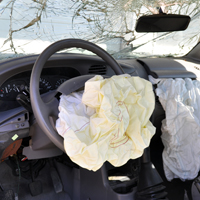 The Insurance Institute for Highway Safety (IIHS) has many rigorous tests that determine its safety ratings for the more than 200 models of cars and trucks available to consumers. Vehicles must prove their crashworthiness in tests of how well the front and sides protect their occupants. Other factors such as roof strength and head restraint performance are tested as well. In another measure of safety, a small overlap frontal crash test simulates what happens when the driver’s side of the vehicle hits a pole or tree.
This offset test proved difficult for a number of vehicles when it was first introduced five years ago. The results spurred automakers to make improvements such as extending bumpers, providing larger side-curtain airbags, and strengthening the passenger compartments.
New IIHS Crash Test
The success of these safety improvements to the driver’s side brought to light the fact that now passengers in the front need similar protections. To that end the IIHS has a small overlap test for the passenger side of vehicles. Overlap tests are more rigorous than direct frontal crash tests and show the effectiveness of the airbag, seatbelt, and outer edges of the car not included in the crush zone.
Top Ten Midsize Cars
The passenger side small overlap test was first used on 13 models of midsize cars. Of these, 10 vehicles earned a rating of good. Two, the Volkswagen Passat and Chevrolet Malibu, achieved only marginal results, and the Volkswagen Jetta was deemed acceptable. The 10 cars receiving good marks were as follows:
- 2018 models: Subaru Legacy, Subaru Outback, Toyota Camry
- 2017 models: Ford Fusion, Honda Accord, Lincoln MKZ, Hyundai Sonata, Mazda6, Nissan Altima, Nissan Maxima
Critics of the test say that the IIHS is supported by the insurance industry, which has an interest in reducing claim costs. They note that while offset collisions can produce serious lower body injuries, they are not a major cause of fatalities. However, senior engineers at IIHS see passenger head protection as an urgent safety issue. Passenger test dummies in the Passat and Malibu, the cars that received marginal grades, slid off the front airbag and hit their heads on the dashboard during the offset collision test. Optimizing the seatbelt and airbag performance could prevent this. In comparison, the Subaru models were particularly effective in protecting passengers, showing low-risk of injury in a real-life crash.
More cars will undergo the new test in the coming months and the results will be available on the IIHS website. Crash tests are useful not only for determining which cars and trucks are safest, but also to root out defects so that they can be addressed and improved, thus avoiding recalls and product liability lawsuits for carmakers.
Wilmington Personal Injury Lawyers at Jacobs & Crumplar, P.A. Represent Those Injured by Defective Products
If you have been injured in a car accident caused by a product defect, you may be entitled to compensation. Contact the experienced Wilmington personal injury lawyers at Jacobs & Crumplar, P.A. to review your legal options. Call 302-656-5445 today or complete our online contact form to schedule a free consultation. From our Wilmington and Georgetown offices, we proudly represent clients throughout the state, including those in Dover, New Castle, and Newark, Delaware.
Asbestos Found in Makeup Marketed to Children
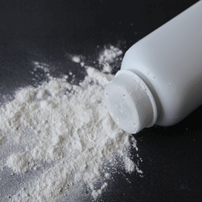 The non-profit consumer watchdog group Unites States Public Interest Research Group (PIRG), tested makeup products containing talc and found three that contained high levels of asbestos. All three products came from the Illinois-based retailer Claire’s. Claire’s sells fashion accessories and jewelry mainly to girls and young women nationwide.
Talc is a common ingredient in many cosmetic products and can contain asbestos. Asbestos is a highly toxic substance that has been banned from many commercial uses, because exposure can lead to lung cancer or mesothelioma. Using it on skin over time increases the risk of skin cancer. There is no amount of asbestos exposure that is considered to be safe.
The products affected were Claire’s shadow and highlighting kit, compact powder, and the contour palette. PIRG called on the FDA to perform regular testing of cosmetics for harmful chemicals, and further said Claire’s should pull the items from sale immediately. A statement from Claire’s categorically denied the accuracy of the testing done by PIRG, saying the methods used are obsolete and unreliable.
Concerned Mother Sparks Recall
In December, Claire’s voluntarily recalled nine makeup products after a lab in North Carolina showed positive tests for asbestos in those products. A concerned mother had sent her child’s glitter makeup kit from Claire’s for testing. She was shocked to find that the makeup marketed to children contained tremolite asbestos. To determine the extent of the problem, she and another bought 17 different Claire’s makeup products from nine different states and found that every single one contained tremolite asbestos.
The tests were conducted at Scientific Analytical Institute by a scientist who expressed concern that the products had been bought within two weeks of the testing. The scientist said this meant that it was unavoidable that other children had also been potentially exposed to the toxic substance.
In January 2017, Claire’s announced that new testing from two certified independent labs confirmed that their products are free of asbestos and completely safe. As of March 2018, however, debate about the safety of these products remained ongoing.
According to the executive director of Massachusetts-based PIRG, expert opinion holds that nothing that contains asbestos should be put on the body. Asbestos-related diseases generally develop slowly, over long periods of time, after particles of the substance are inhaled and lodge in the respiratory system. The average latency period for mesothelioma from exposure to diagnosis is 35 to 40 years.
Compensation for Asbestos-Related Diseases
There are several avenues of compensation available to those who have suffered harm from exposure to toxic chemicals or substances. These include
- Workers’ Compensation for workers who develop an occupational illness
- Toxic tort claims against parties who were obligated to protect others from hazardous substances
- Product liability claims against the manufacturers of products containing harmful substances
Delaware Asbestos Lawyers at Jacobs & Crumplar, P.A. Advocate for Consumers Harmed by Exposure to Toxins
Contact Jacobs & Crumplar, P.A. to speak to an experienced Delaware asbestos lawyer if you may have been exposed to asbestos. For more than 30 years, our firm has been dedicated to helping injured people. Call us at 302-656-5445 or complete our online contact form to schedule a consultation in our Wilmington or Georgetown offices. We represent clients throughout Delaware including Dover, New Castle County, Kent County, and Sussex County.
FDA Targets Homeopathic Drugs for Safety Risks
 At present, homeopathic drugs sold in the United States do not have to be approved by the Food and Drug Administration (FDA) the way conventional drugs do. Recently though, homeopathic drugs are coming under increased scrutiny. The FDA says it will target products with potentially harmful ingredients, and those being marketed for illnesses such as cancer, heart disease, and treatment of alcohol and opioid addictions.
One practice of homeopathy holds that the substances that cause disease symptoms can also cure them when introduced in miniscule amounts. No modern studies have been able to prove this, and in fact have instead shown that the effects of homeopathic treatment can range from no effect at all to actually harming patients. In one such case, 10 children died and 400 were injured from using homeopathic teething tablets and gels containing belladonna, a toxic substance. An analysis by the FDA lab showed some of the products to contain elevated and inconsistent levels of belladonna.
In past years, the FDA has issued warnings about products that contain strychnine, which is used as rodent poison, as well as products with zinc for intranasal use that may damage the user’s sense of smell. Other problematic homeopathic drug products were those advertised for asthma sufferers that did not provide effective asthma treatment.
Promise of Action by the FDA
The FDA will not require that all homeopathic products be approved because the process would be too arduous. The homeopathic industry offers treatments for everything from colds to cancer and generates revenues in the billions of dollars annually. Products not considered high risk will remain available to consumers, but others, such as treatments that must be injected, treatments for serious diseases, and products for children or the elderly, will get a much closer look from the FDA.
In a statement, FDA Commissioner Scott Gottlieb said poor manufacturing quality or unsafe ingredients in homeopathic products could put trusting consumers at risk. Many are spending money for treatments that have either little to no effect on serious ailments and in the worst case, “may cause significant and even irreparable harm.” Other countries are also moving to rein in the use of homeopathy. In Britain, the National Health Service (NHS) announced plans to end prescriptions for homeopathic drugs in July. There, the chief executive of the NHS qualified homeopathy as a misuse of scarce funds for what amounts to a placebo.
The FDA announcement came as the result of public hearings on its enforcement policies for homeopathic products held in April 2015. The hearings generated 9,000 public comments that led the FDA to propose its new “risk-based enforcement approach.”
Wilmington Product Liability Lawyers at Jacobs & Crumplar, P.A. Recover Compensation for Those Harmed by Dangerous Drugs
If you or someone you love has been harmed by a defective drug or other product, contact the dedicated Wilmington product liability lawyers at Jacobs & Crumplar, P.A. for help determining your legal options. From our Wilmington and Georgetown offices, our skilled and experienced attorneys assist injured clients in Dover and throughout Delaware and the tri-state area. Call 302-656-5445 today or contact us online to schedule a free initial consultation.
Types of Defective Product Liability Claims
 Dangerous or defective products cause injury to millions of consumers each year, according to the United States Consumer Product Safety Commission. The injuries arise from various products including household appliances, toys, and all-terrain vehicles. If a consumer uses a product and is injured, he or she may have a valid product liability claim. There are three main types of product liability claims: manufacturing defect, design defect, and failure to warn.
Manufacturing Defect
This type of claim is based on the defective manufacturing of a product. This occurs when a product departs from its intended design, therefore rendering it more dangerous than expected. Common examples include contaminated medicine or an improperly assembled bicycle.
This type of claim does not require proof that the manufacturer was negligent in designing the product, but rather only that the product was erroneously manufactured. Therefore, the defendant’s exercise of care and good intentions are not relevant. The error in manufacturing alone is generally enough to establish a defective manufacturing claim if the error – and not the claimant’s own negligent action – was the cause of the claimant’s injury.
Defective Design
A defective design claim arises when a product’s design is inherently flawed, rendering it unreasonably dangerous. Because the plans themselves are defective, it does not matter if the manufacturer follows them without error. Therefore, although the product may be manufactured as intended, the underlying defect in its design caused it to be unreasonably dangerous. Common examples include toys intended for children that contain choking hazards or a poorly designed ladder that does not support the amount of weight intended.
Claims for defective design will succeed only if the claimant sustained injury from a product’s defective design when they used the product in a reasonable manner and did not misuse the product. For example, a consumer who removes a safety guard from a tool may not be able to recover if they suffer injury from the altered product. Likewise, a consumer who uses a product in a way that the manufacturer did not intend and could not have foreseen may not be able to recover compensation for their injuries.
Failure to Warn
In this type of product liability claim, a claimant must establish that they suffered injury because they were not provided adequate warnings or instructions regarding the product’s use. If consumers are not instructed on how to handle and use the product safely and were injured as a result, they may be entitled to damages if the dangers were non-obvious and unpredictable. Some examples are a tea kettle that does not contain adequate warnings regarding an oddly positioned steam valve or a baby car seat that does not have a label with weight specifications. A knife manufacturer, however, would not be liable for a consumer’s injuries due to the blade’s sharpness because the danger was obvious and predictable.
Manufacturers have a duty to stay knowledgeable about their products, therefore if they fail to warn the public of risks they should have known about, they may be liable for consequent injuries. Warnings should be placed in a conspicuous location, understandable to the average user of the product and informative about the risks and how to avoid them.
Wilmington Personal Injury Lawyers at Jacobs & Crumplar, P.A. Represent Those Injured by Defective Products
If you have been injured by a defective product, contact a knowledgeable Wilmington product liability lawyer at Jacobs & Crumplar, P.A. Our offices are located in Wilmington and Georgetown, Delaware and we represent clients throughout the state, including those in Dover, Delaware. Contact us online or call us at 302-656-5445 today to schedule a free consultation.
Safe Shopping for Toys
 Every year sees many children rushed to the emergency room with toy-related injuries, particularly choking hazards. While many toys are well made and safe for little hands to play with, many are dangerous and should be avoided. With the holiday season upon us, it is important to review safety tips for toy shopping so that any gift you give will be well received and enjoyed by the child for whom it is chosen.
The U.S. Consumer Product Safety Commission (CPSC) regulates toy safety standards. Since 1995, any toy imported into or made in the U.S. must comply with these standards. Any toys that have been recalled are listed on the commission’s website. The CPSC also publishes guidelines for buying children’s toys. Using these together with some common sense can be very helpful when choosing a toy for a child.
Toys for Toddlers
First and foremost, choose an age appropriate toy. For babies, toddlers and preschoolers, this means toys without small parts that can present a choking hazard. Any eyes, wheels, or buttons that could be pulled or chewed off are dangerous for this age group. Objects like marbles, coins, or balls less than 1.75 inches in diameter can block a child’s airway if swallowed causing asphyxiation.
When buying squeaky toys, rattles, or toys that play music or make electronic sounds, check to see how loud they are before you buy. Very small children like to hold toys to their ears to hear what happens when they push buttons. Inappropriately loud toys can cause hearing damage when used this way.
Batteries and their fluids are extremely dangerous for small children. Any battery-operated toys must have a battery pack that screws tightly closed and cannot be pried open.
Toys for Grade School Children
For children in grade school, riding toys such as bikes, scooters, inline skates, and skateboards should be used only with helmets. Any kind of dart or arrow toy should have soft tips. Check electronic toys for labeling indicating that it meets Underwriters Laboratories standards (UL).
Tips for Teenagers
Many digital toys and game players come with parental control options. These can be extremely useful in providing breaks from the internet for teenagers who spend too much time online.
Other Toy Buying Tips
- Checking painted toys for lead free paint
- Making sure art materials are non-toxic: for crayons and paints, look for a label that says ASTM- D-4236 from the American Society for Testing and Materials
- Checking fabric toys for flame retardant labeling
Once the toys are in your home, check them regularly for any broken parts or seams, splinters in wooden toys, or rust on metal toys. Broken toys should be removed immediately to prevent them breaking further and causing injury.
Wilmington Product Liability Lawyers at Jacobs & Crumplar, P.A. Help Those Injured by Defective Products
Toys purchased in the U.S. must meet rigorous safety standards. But despite this fact, manufacturers are frequently forced to issue recalls for toys that pose a risk to the children playing with them. If your child has been injured by a defective product, contact an experienced Wilmington product liability lawyer at Jacobs & Crumplar, P.A. to arrange a free review your case. Call 302-656-5445 today to schedule an appointment in our Wilmington or Georgetown office, or contact us online. We serve clients throughout the area, including those in Dover, Delaware.
Defective IVC Filters
 An inferior vena cava filter, or IVC filter, is a tiny medical device used to prevent potentially fatal pulmonary embolisms – blood clots that cause blockages in arteries in the lungs. The inferior vena cava is the largest vein in the body, carrying blood from the lower body back to the heart. The IVC filter looks like a metal cage and is inserted into the inferior vena cava to “catch” blood clots that form before they can travel to the lungs where they can be life-threatening. The device was developed for use in patients who are at risk for pulmonary embolism, but who cannot use anticoagulants (blood thinners).
Use of IVC Filters
Under certain circumstances doctors will recommend the insertion of an IVC filter, usually when use of anticoagulants would create a risk of uncontrolled bleeding. Typical cases where IVC filters are used include gunshot and stab wounds, spinal cord injuries, serious falls, cancer diagnosis or treatment, emergency surgeries, dialysis treatment, car accidents, and in mothers who have just given birth.
Complications from IVC Filters
IVC filters were first approved for use in 1979 by the U.S. food and Drug Administration and over the years they came into frequent usage. However, patients started to report adverse effects from the devices. By 2010, the FDA issued a safety alert for product complications regarding use of IVC filters, particularly those manufactured by Cook Medical and C.R. Bard. These complications include the following:
- Device migration – the filter can move to another part of the vena cava, other organs, or to the heart itself
- Filter perforation – the filter can tilt out of position and puncture the vena cava or other internal injuries
- Filter fracture – the device breaks into pieces and the pieces can travel through the body to the heart and lungs
Additionally, some patients develop deep vein thrombosis (DVT), an embolization surrounding the filter, or blockage that causes the legs to swell. Some cases require emergency removal of the filter which can mean invasive, risky and costly surgery.
The 2010 safety alert warned doctors that because of the risk of complications with IVC filters, they should be removed after the danger of pulmonary embolism was no longer an issue. The alert was updated by the FDA in 2014 to emphasize that the longer the device remained in place, the greater the risk to the patient of developing problems.
Legal Options for Patients with IVC Filter Complications
The FDA warning in 2010 was issued in part because there had already been at least 900 reports of adverse reactions associated with IVC filters. Nationwide, many patients have suffered severe complications and injuries resulting in product liability lawsuits against the manufacturers of the devices. In addition to Cook Medical and C.R. Bard, multiple lawsuits over failed IVC filters manufactured by Rex Medical and distributed by Argon Medical have been filed.
Wilmington Product Liability Lawyers at Jacobs & Crumplar, P.A. Advocate for Patients Injured by IVC Filters and Other Defective Medical Devices
If you or someone you love has experienced medical complications after the insertion of an IVC filter, contact a skilled Wilmington product liability lawyer at Jacobs & Crumplar, P.A. We will fight to hold the manufacturers of defective products accountable and get you the compensation you deserve. Call 800-355-1818 today to schedule a free consultation about your case. You can also complete our online contact form. From our Wilmington and Georgetown offices we serve clients in upstate and downstate Delaware.