



Blind Spot Truck Accidents
 Driving a passenger car near a huge truck can be intimidating. For obvious reasons, it is a good idea to keep your distance from these monstrous vehicles and steer clear of a truck that is showing signs of structural issues or seems to be under the operation of an unsafe driver. Simply traveling close to a giant truck can put you and your car’s occupants in danger of a blind spot accident.
The physical size of tractor trailers can cause visibility issues for the driver of a nearby vehicle. Although truck drivers are trained to keep track of the traffic around their vehicle, drivers can easily lose track of a car that finds its way into a truck’s blind spot, creating an unsafe situation if the truck driver attempts to turn, change lanes, or stop without noticing that there is a neighboring vehicle out of sight.
What are Blind Spots?
All vehicles have blind spots, or areas that the driver cannot see while driving. Even with a rear-view and side mirrors, some areas surrounding the vehicle are hidden from the driver’s view. In cars and trucks of all sizes, blind spots are a serious concern. It is still important while driving or backing up to account for the possibility that there could be an object, vehicle, or person in your blind spot. In commercial trucks, the blind spots are bigger and the potential for disaster is significantly increased.
Where are a Truck’s Blind Spots?
Tractor trailers have four major blind spot zones:
In front of the cab: The driver is unable to see anything immediately over the front of the truck. It is best to keep a distance of at least 20 feet from the front of a truck.
Behind the trailer: The area directly behind the trailer is completely out of the driver’s view. If you are traveling behind, it is best to leave at least 30 feet between your vehicle and the back end of a tractor trailer.
Below and beside the driver’s window: Much of the lane to the truck driver’s left is difficult to see from their viewpoint. Stay out of that lane, if possible. If you must pass, do so without spending too much time in the area next to the trailer.
Right side of the truck: The two lanes to the right of the truck are visually problematic for the truck driver as well. If you must travel in these lanes, be mindful of the truck driver’s limited range of view.
Wilmington Truck Accident Lawyers at Jacobs & Crumplar, P.A. Fight to Obtain the Compensation You Deserve
If you or someone you love was injured in a truck accident, the Wilmington truck accident lawyers at Jacobs & Crumplar, P.A. can help you obtain compensation. To learn more, contact us online or call us at 302-656-5445 to schedule a free case evaluation. With offices located in Wilmington and Millsboro, Delaware, we serve clients throughout Dover, New Castle County, and Sussex County.
Dump Truck Accidents
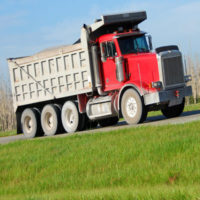 Dump trucks represent a heightened risk of injury and death compared to passenger vehicles. A typical dump truck weights several times the average passenger vehicle. In fact, a loaded dump truck can weigh over 65,000 pounds and can create catastrophic consequences when involved in a collision.
Weight is not the only factor that makes dump trucks especially dangerous. Dump trucks are designed to have added ground clearance and a relatively high center of gravity. This makes the trucks much more susceptible to overturning while making turns. The combination of heavy weight and a relatively high center of gravity makes dump trucks inherently harder to stop or maneuver. Considering this, precautions are necessary to maintain safety.
Keeping the Roads Safe
Both individual state and federal laws impose requirements on commercial drivers. When applying for a commercial driver’s licenses, applicants must have a clean driving record and pass medical, written, and practical driving tests. The Motor Carrier Safety Improvement Act of 1999 requires a commercial driver’s license holder to be disqualified from operating a commercial motor vehicle when convicted of major violations, such as driving under the influence of alcohol or drugs. The holder can also be disqualified for serious traffic violations, such as making erratic lane changes or driving recklessly.
Despite efforts to minimize risks posed by dump trucks, serious accidents often happen. Some of the more common causes include negligent acts by the driver, such as:
- Failing to yield when leaving a construction work zone or driving recklessly
- Inadequately securing loads
- Neglecting safety procedures
Sometimes, the hazard is created by the truck owner, such as if a truck is not properly maintained. Failure to properly maintain the brakes, steering, and tire traction and pressure is especially risky and invites serious accidents to take place. Unfortunately, according to the Federal Motor Carrier Safety Administration, serious dump truck accidents are on the rise. In 2016, 8,206 dump trucks needed to be towed from an accident. This was an increase of nearly 10 percent from the year prior. In that same year, 5,483 accidents involving injuries were recorded, representing an increase of 2.7 percent from the year prior.
Representing Victims of Dump Truck Accidents
Victims of dump truck accidents may need to file a personal injury lawsuit to receive full compensation for medical expenses, lost wages, pain and suffering, and other crash-related damages. If a victim is killed in a dump truck accident, the surviving family will need to file a wrongful death claim to be compensated for their losses.
Wilmington Truck Accident Lawyers at Jacobs & Crumplar, P.A. Advocate for Victims of Dump Truck Accidents
If you were seriously injured in a dump truck accident, contact an experienced Wilmington truck accident lawyer at Jacobs & Crumplar, P.A. Call us at 302-656-5445 or complete an online form for a free consultation. Located in Wilmington and Georgetown, Delaware, we serve clients throughout the state, including Dover, New Castle County, and Sussex County.
Drowsy Driving Truck Accidents
 Proposed changes to the hours-of-service (HOS) rules would give truck drivers more flexibility in their workday. The Federal Motor Carrier Safety Administration (FMCSA) has proposed revisions to the HOS rules, all of which are geared toward allowing truck drivers to better manage the challenges of driving long distances. The FMCSA administrator hopes that, if implemented, these changes help reduce the number of drowsy driving truck accidents that occur each year.
Consequences of Drowsy Driving
Inadequate sleep can cause drivers to be less attentive, react slower, and make poor decisions. Drowsy driving is an increasingly dangerous problem in the U.S.; the National Highway Traffic Safety Administration (NHTSA) estimates that it causes up to 100,000 accidents per year.
Commercial truck drivers are at risk for this type of accident due to the nature of their jobs. Truck drivers are often required to drive for many hours across long stretches of highway to meet tight deadlines. Without adequate sleep, these demanding schedules take an even greater toll on drivers. Also, many truck drivers have undiagnosed sleep disorders, such as sleep apnea, which can lead to daytime fatigue and falling asleep at the wheel.
Driving drowsy is in many ways similar to drunk driving. Drivers who do not obtain adequate sleep may experience impaired judgment, dulled senses, and delayed reaction times. The Centers for Disease Control and Prevention (CDC) recommends that adults get at least seven hours of sleep per night to prevent drowsy driving.
Proposed Changes to the HOS Rules
Currently, truck drivers hauling property are subject to several HOS rules. The FMCSA’s proposal would:
- Require drivers to take a break of at least 30 minutes when they drive for eight hours without interruption
- Permit drivers to split their required 10 hours off-duty into two periods; one for at least seven consecutive hours in the sleeper berth and the other for at least two consecutive hours either in the sleeper berth or off-duty
- Allow one break between 30 minutes and three hours to pause the 14-hour driving limit so long as the worker takes 10 consecutive off-duty hours at the end of their shift
- Extend the permitted driving window for the adverse driving exception to two hours
- Lengthen short-haul drivers’ maximum on-duty period from 12 to 14 hours and extend their distance limit from 100 to 150 air miles
Wilmington Truck Accident Lawyers at Jacobs & Crumplar, P.A. Represent Victims Injured in Drowsy Driving Accidents
If you were injured in a drowsy driving accident, contact a Wilmington truck accident lawyer at Jacobs & Crumplar, P.A. We can help you obtain the maximum compensation to which you are entitled. Our experienced attorneys represent clients in Dover, New Castle County, and Sussex County from our offices conveniently located in Wilmington and Georgetown, Delaware. For a free consultation, please complete our online contact form or call us at 302-656-5445.
What are Truck Underride Accidents?
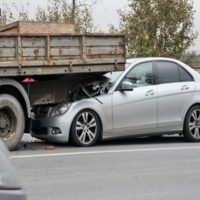 In truck underride accidents, a smaller car becomes lodged underneath the back or side of a tractor trailer. As opposed to an override accident, which occurs when a truck drives over a car, an underride incident involves the back or side of the truck. Sometimes, the motorist drives under the back or side of the truck. In other cases, a huge commercial truck backs up over a car or turns unexpectedly into the path of a car, causing the car to end up underneath the side of the tractor trailer. Truck underride accidents come in many forms. These accidents occur when a driver rides up under the back of a truck that has stopped or decelerated suddenly.
Usually, these truck accidents inflict serious damage to the smaller vehicle and harm its occupants. The size and power of these giant trucks can crush the top of a car. The car roof can be sliced off and extensive damage to the passenger cabin can cause severe injuries or fatalities. In fact, truck underride accidents are some of the most gruesome and catastrophic road incidents in the trucking industry. They almost always involve severe injuries and are often fatal.
Prevention and Protection
Underride guards are now mandatory for all commercial trucks of a certain size. These metal rails extend from the back of the truck toward the ground to obstruct the gap under the truck’s carriage and the road. Unfortunately, this safety feature has some limitations. Sometimes, the guards are installed with enough room for a smaller vehicle to fit underneath, leaving them unprotected. The rear-end barrier does nothing to prevent side-impact underrides.
Even when the guards are in place, they may not be properly visible due to reflective stickers that have peeled off or are covered in dirt and debris that obscures their shiny surface. To avoid back-end overrides, break lights on the trailer should be working properly as well.
Liability and the Law
If the truck involved was improperly built or inadequately maintained to avoid this type of accident, car occupants who were injured in an underride accident have a case to make against the truck’s manufacturer or the trucking company. If the driver was negligent, there may be cause to bring a suit against them or their employer. A driver may be found negligent if they were driving impaired or fatigued. Any unsafe driving that contributed to the accident may be held against them as well.
Wilmington Truck Accident Lawyers at Jacobs & Crumplar, P.A. Help Victims Injured in Truck Underride Accidents
Drivers and passengers who were hurt in underride accidents may be eligible to collect damages for their injuries. We can help build your case against a negligent driver or trucking company. Call a Wilmington truck accident lawyer at Jacobs & Crumplar, P.A. today at 302-656-5445 or contact us online to set up a free consultation today. With offices in Wilmington and Georgetown, Delaware, we represent clients in Dover, New Castle County, and Sussex County.
Delayed Approval for Hours of Service Regulations
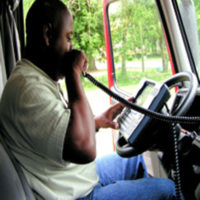 Accidents involving commercial tractor trailers have become much too common on the country’s highways. With driver fatigue among the main causes of commercial truck accidents, the federal government has instituted regulations limiting the number of service hours a commercial truck driver can operate their vehicle without taking a mandatory rest break. New proposed regulations aim to give commercial truck drivers more flexibility in adhering to the hours of service rules.
Proposed Federal Regulations
To make it easier for commercial truck drivers to adhere to the rules, the Federal Motor Carrier Safety Administration (FMCSA) has drafted new hours of service regulations. Under the new rules, commercial truck drivers would be subject to extended limits for continuous driving hours permitted and the number of hours they can operate under adverse driving conditions. The current 100 air mile short haul exemption was expanded to 14 hours on-duty and the current 30-minute mandatory break for truck drivers after driving for eight continuous hours has been revised. Other changes to regulations involve splitting up rest breaks for drivers of trucks with sleeping berths.
Public Comment Period
A public comment period prior to the implementation of the proposed regulations allows citizens, safety advocacy organizations, and industry stake holder groups, such as the Owner-Operator Independent Drivers Association or TruckerNation.org to express their concerns about the new rules. During the public comment period, the FMCSA also will hold several public listening sessions.
Continued Delay
Supporters of the proposed legislation worry the new hours of service regulations will not go into effect any time soon. The original time frame allowing for public comment on the proposed rules has been delayed as the pending review of public comments continue. Safety experts warn the number of truck collision fatalities will continue to rise until more effective hours of service regulations become law.
Compensation for Truck Accident Injuries
Fatalities involving drivers, passengers, and pedestrians frequently result from truck collisions. Truck accidents can result in serious and life-changing physical injuries. Individuals involved in collisions with trucks often suffer broken bones, loss of limbs, concussions, traumatic brain injuries, internal bleeding, organ damage, back injuries, paralysis, and other medical complications that require years of medical treatment. Medical expenses, including the cost of hospital stays, prescription drugs, physical therapy, occupational therapy, and ongoing medical testing can be a financial nightmare.
By filing a civil lawsuit against those responsible for the trucking accident, injured individuals can obtain compensation for these medical costs, the cost of the physical damage to their vehicle, and damages for their pain and suffering. Contacting an experienced Wilmington truck accident lawyer is the first step in moving forward after a truck accident.
Wilmington Truck Accident Lawyers at Jacobs & Crumplar, P.A. Assist Truck Accident Victims
If you or a loved one has suffered serious injuries in a collision with a truck, the experienced Wilmington truck accident lawyers at Jacobs & Crumplar, P.A. can help you obtain compensation for your injuries. Located in Wilmington and Georgetown, Delaware, we represent truck accident victims throughout the state, including those in Dover, New Castle County, and Sussex County. To schedule a free initial consultation today, call us at 302-656-5445 or submit an online inquiry form.
Truck Accidents with Hazardous Materials
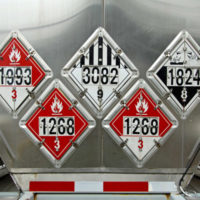 Truck accidents can cause serious damage and injury. Accidents involving trucks that contain hazardous materials can be catastrophic. Any truck barreling down a highway can be intimidating for nearby drivers. The vehicle’s size is enough to make a neighboring driver uneasy. Considering these threats to safety, how often do we consider the dangers hidden inside the huge trailers being hauled along our local roadways?
Trucks are used to transport goods for various industries. It may be surprising to realize how often the materials transported for these purposes are toxic, flammable, or corrosive substances that have the potential to turn our roads into danger zones. An accident seems more conceivable when it involves driver errors or vehicle malfunctions. It is less foreseeable that a leak from a tanker of hazardous material will set off an uncontrollable fire or fill the air with toxic fumes.
Regulations
The trucking regulations in place for companies and drivers are stringent and in-line with the potential dangers involved in operating these vehicles. Likewise, the added level of danger inherent in handling and transporting hazardous materials calls for additional safety training and certification.
Regardless of the load being carried, all truckers are required to follow normal driving laws, such as following the posted speed limits and avoiding risky behaviors, such as distracted or intoxicated driving, but they are also subject to rules regarding their personal conduct, such as obtaining enough rest to avoid sleepiness behind the wheel.
Drivers and other trucking professionals who deal with these harmful substances are required to adhere to protocols and procedures that are intended to address these added dangers. The crews that pack up the shipment are supposed to mark the load with a placard that signifies that the contents are dangerous. The notice should indicate what kind of material is present and what dangers are posed as a result.
Who is At-Fault?
It takes many people to get a truck’s shipment to its destination. All of them are responsible for making safety a major priority for the trip. If there is a breakdown in the system, the results can be tragic. A shipper should make sure to load the cargo safely in a container appropriate for the materials. The placard and other warnings should be affixed to the truck to advise caution.
Truck manufacturer and maintenance crews should be sure the truck is fit for the road. The trucking company is responsible for planning the trip using a truck appropriate for the size and weight of the load. Finally, the driver must operate the vehicle with care. If any element of the safety plan goes unchecked, an accident may result. Victims may find it difficult to determine where things went wrong and who is responsible for their injuries. A lawyer familiar with the rules and practices of the trucking industry can help.
Wilmington Truck Accident Lawyers at Jacobs & Crumplar, P.A. Represent Victims Harmed by Trucks Transporting Hazardous Materials
If you were injured in an accident with a truck transporting hazardous materials, you need the Wilmington truck accident lawyers at Jacobs & Crumplar, P.A. to prove your case and obtain the compensation you deserve. Call us at 302-656-5445 or contact us online to set up a free consultation. With offices in Wilmington and Georgetown, Delaware, we serve clients in Dover, New Castle County, and Sussex County.
Overloaded and Overweight Truck Accidents
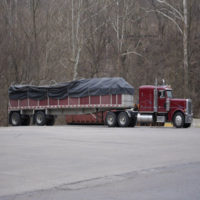 Truck accidents cause terrible suffering and damage every day. The sheer size and weight of these trucks increase the extent of destruction and loss. Many trucks weigh up to 80,000 pounds and losing control can be extremely catastrophic. With a vehicle that size, it is much harder to regain control. An uncontrolled truck traveling at highway speeds is a danger to all vehicles on the road with the potential to cross into several lanes at once, roll over on top of nearby cars, or cause a massive multi-car pileup.
When these gigantic vehicles hit the road, the loads they carry add an additional risk. The weight of the shipment alone adds to the impact of a potential collision, but if the load is not properly packed onto the truck and adequately restrained, it may become an active impediment to road safety. Overly heavy or shifting loads can throw the truck off course. Improperly weighted loads can be too much for the brakes or body of the truck to support.
Load Weight Regulations
Each commercial truck is assigned a Gross Vehicle Weight Rating (GVWR) by the manufacturer to determine the weight that can be safely carried. The rating is established by calculating the limits of the truck’s structural parts, such as its frame and axel, as well as the limits of its mechanics, including the powertrain capacity and breaking power. The rating should be posted on the truck’s plate. The GVWR should not exceed 80,000 pounds without a special permit.
Ignoring Guidelines
Commercial truck drivers should be able to count on the materials they are shipping to be carefully loaded with all the safety guidelines in mind. When these guidelines are neglected or deliberately ignored, they can spell danger down the road. Truckers may also be at fault, as they are required to weigh their loads throughout their transportation. Weigh stations are located conveniently for their use along major highways. Sometimes, however, the weight limits are ignored in the interest of time or profit.
Overloaded Driving Dangers
Trucks carrying heavy loads are more difficult to control. Breaking can be tough and maintaining a safe speed downhill can present a problem. An overloaded truck is more susceptible to imbalance and roll-over accidents. An overloaded truck may involve items that are not secured properly that could fall onto the road.
Liability and Damages
When someone is injured in a trucking accident, there are many parties with potential liability. The driver, the trucking company, the truck manufacturer, or the shipping company may be to blame. Instinctively all those parties will point fingers at the others.
Wilmington Truck Accident Lawyers at Jacobs & Crumplar, P.A. Help Victims Obtain Compensation
If you or a loved one was involved in an accident with a commercial truck, you need the help of a legal professional who knows the trucking industry. The Wilmington truck accident lawyers at Jacobs & Crumplar, P.A. have experience confronting trucking companies, truck manufacturers, and merchandise shippers to obtain compensation for victims of truck accidents. For a free consultation, contact us online or call us at 302-656-5445 today. With offices in Wilmington and Georgetown, Delaware, we offer representation in Dover, New Castle County, and Sussex County.
Truck Accidents Increase During the Holidays
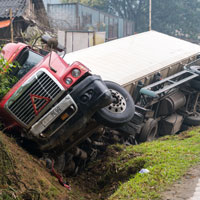 Spending time with family, attending holiday parties, volunteering, and going to the mall are all part of that favorite time of year: the holiday season. It all starts on Black Friday and runs full force until January 2.
All these festivities and errands lead to increasing amounts of cars and trucks on our roads. Unfortunately, this causes more traffic accidents during the holidays than other times of year.
Cities and neighborhoods are full of all kinds of freight and delivery trucks throughout these months. The Washington Post has reported that the USPS delivers close to 600 million packages, and that FedEx transports around 300 million throughout the holiday season. A corresponding spike in the amount of freight truck crashes shows a higher accident risk, which is around 10 percent.
Dangerous Truck Drivers
The trucking industry has a reputation for encouraging its drivers to work long hours. Without proper rest, serious driver fatigue can occur. During this time of the year, drivers have especially busy schedules, and can end up working more hours than usual.
The Federal Motor Carrier Safety Administration (FMCSA) regulations state that a driver cannot work more than 70 hours over seven days. Companies and their drivers may not monitor or enforce this law, especially if they are trying to meet delivery deadlines.
Another factor that causes truck accidents is bad weather. Late November and December can be rainy, snowy, and/or windy, and poor driving conditions also contribute to more crashes. If a driver is not well-trained, they can easily lose control of their truck.
Companies may hire extra drivers during the season to keep up with the workload. If they cannot find qualified ones, they may hire those with less experience.
Practice Safe Driving Around Trucks
Even if the weather is fine, it is always smart to decrease speed when driving near a truck. Tailgating them or passing at unsafe speeds is very hazardous. It is easy to get caught up in holiday stress; but aggressive driving around these large vehicles is a recipe for disaster.
These trucks also have large blind spots, which should always be avoided. They are located directly behind and directly in front of the truck, and next to both of the doors of the truck’s cab.
The most important safety recommendation for holiday driving around trucks is to keep a good distance. Driving alongside of one should never be done for more than a few minutes. If the truck driver indicates that the truck is going to move into another lane or merge, they should be given extra room by other drivers.
These trucks also need extra room to stop; if they brake suddenly, they can cause a collision. For example: If there is unexpected debris in the road, it would take a tractor trailer much longer to slow down to avoid a crash. A tailgating, speeding car behind it could easily crash into the back of the truck, causing a serious or even fatal accident.
Wilmington Truck Accident Lawyers at Jacobs & Crumplar, P.A. Help Truck Accident Victims
Even the safest drivers can become involved in truck accidents during the busy holiday season. For effective legal representation, truck accident victims can contact a knowledgeable Wilmington truck accident lawyer at Jacobs & Crumplar, P.A. Call us at 302-656-5445 for a free evaluation, or complete an online form. We have offices in Wilmington and Georgetown, Delaware, and fight for clients throughout Delaware, including Dover, New Castle County, and Sussex County.
High Winds and Truck Accidents
 Late November 2017, fourteen tractor trailers were seen lying on their sides in Colorado and Wyoming along a major interstate highway, close to the state line. The Denver Post reported that it was all caused by high winds. Then, on March second of this year, the local ABC affiliate reported that two trucks were overturned on the Mario Cuomo/Tappan Zee Bridge in New York. The cause was again due to extremely high winds.
Driving in bad weather can be dangerous, especially for a large vehicle like a tractor trailer. Snow, ice and rain can make roads slippery and treacherous, but high winds can actually knock one over. Tractor trailers are much larger and taller than other vehicles, and therefore “catch” the wind, which causes them to shift and move. When strong winds hit up against the sides of large trucks, they can rock, sway, and tip over. This can be deadly for the occupants of any vehicles riding alongside.
Licensed truck drivers should be familiar with driving in all kinds of weather, including high winds. As wind speeds increase, pressure grows around, under, and over the truck. The faster the truck is going, the stronger its effects. This is why slowing down significantly or stopping can prevent tipping over. The Federal Motor Carrier Safety Regulations (FMCSR) read: “If conditions become sufficiently dangerous, the operation of the commercial motor vehicle shall be discontinued and shall not be resumed until the commercial motor vehicle can be safely operated.”
Safe Driving in Unsafe Conditions
An empty trailer can be even more hazardous, since it does not have as much weight. Unsecured cargo can be blown off a flatbed by winds if not properly secured or thrown around an enclosed trailer shifting around in the wind. These truck accidents are nearly all preventable.
There are many steps that truck drivers and trucking companies can take to promote safe driving in high winds. Listening to weather reports before departing and while on route can alert drivers to incoming threats of bad weather. Also, watching for road signs directing drivers to slow down during high winds, as well as flags, windsocks, and even grass and tree movement are all helpful.
Drivers who share the road should also be aware of the weather and look for markers that indicate high winds. Most importantly, keeping an extra distance away from tractor trailers and not passing in bad weather can save lives.
The Liability Question
In high wind related truck accidents, the truck driver may be at fault if they were negligent by driving too fast or erratically. Distracted driving can also lead them to lose control of their vehicle. The driver must always use good judgment behind the wheel.
Mechanical issues can also cause trucks to topple over in strong winds. If the truck did not pass inspection, is in poor repair, or has not been properly maintained, the likelihood of an accident increases greatly. In these cases, the truck company could be at fault.
High winds are a contributing factor to these accidents, but they are not usually the only reason. Driver error or truck conditions may also be contributing factors. To determine liability, all of the variables must be considered. These include overall road conditions, weather, and any other drivers involved.
Wilmington Truck Accident Lawyers at Jacobs & Crumplar, P.A. Represent Victims of Bad Weather Trucking Accidents
If you have been involved in a high wind trucking accident, you need expert help. Contact a professional Wilmington truck accident lawyer at Jacobs & Crumplar, P.A. today. We are conveniently located in Wilmington and Georgetown, Delaware to serve clients throughout Delaware. Contact us online or call us at 302-656-5445 to schedule a free consultation.
Head-on Collision with Tractor-Trailer in Seaford Injures Three Victims
 A head-on collision involving a tractor-trailer and a car left three victims with a range of personal injuries. Just after 11 pm, on Thursday night, the truck accident occurred in Seaford, Delaware when a car hit a tractor-trailer head-on in the intersection of Old Furnace and Middleford Roads. The driver of the car was taken to the Nanticoke Memorial Hospital with critical injuries, and one of the passengers incurred serious injuries, too. The other passenger sustained minor injuries, and the tractor-trailer driver escaped the head-on collision unscathed.
When small vehicles like cars engage in crashes with larger vehicles, the results may be devastating. Due to the size and girth of a tractor-trailer, any party involved in the accident may be at-risk for catastrophic injuries or potential fatalities. Oftentimes, injuries varying in severity accompany head-on collisions, including traumatic brain injuries and spinal cord damage.
If you or your loved ones have been seriously injured in a truck accident, the Georgetown truck accident lawyers at Jacobs & Crumplar, P.A. will assist you.To arrange a free consultation, contact us online or call 302-656-5445. From our offices in Wilmington and Georgetown, we represent individuals and families throughout the state, including those in Dover, Delaware.